
Last updated November 25, 2026
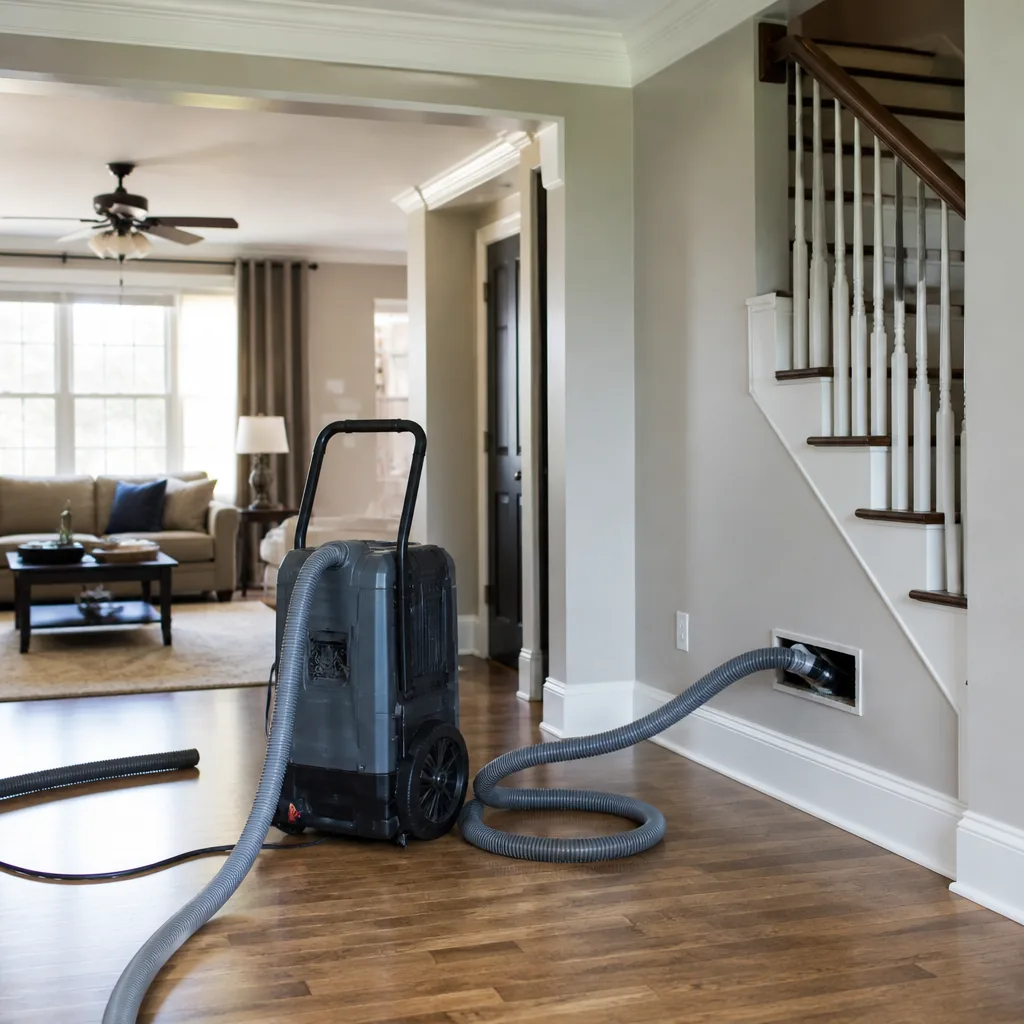 Whole-home duct cleaning
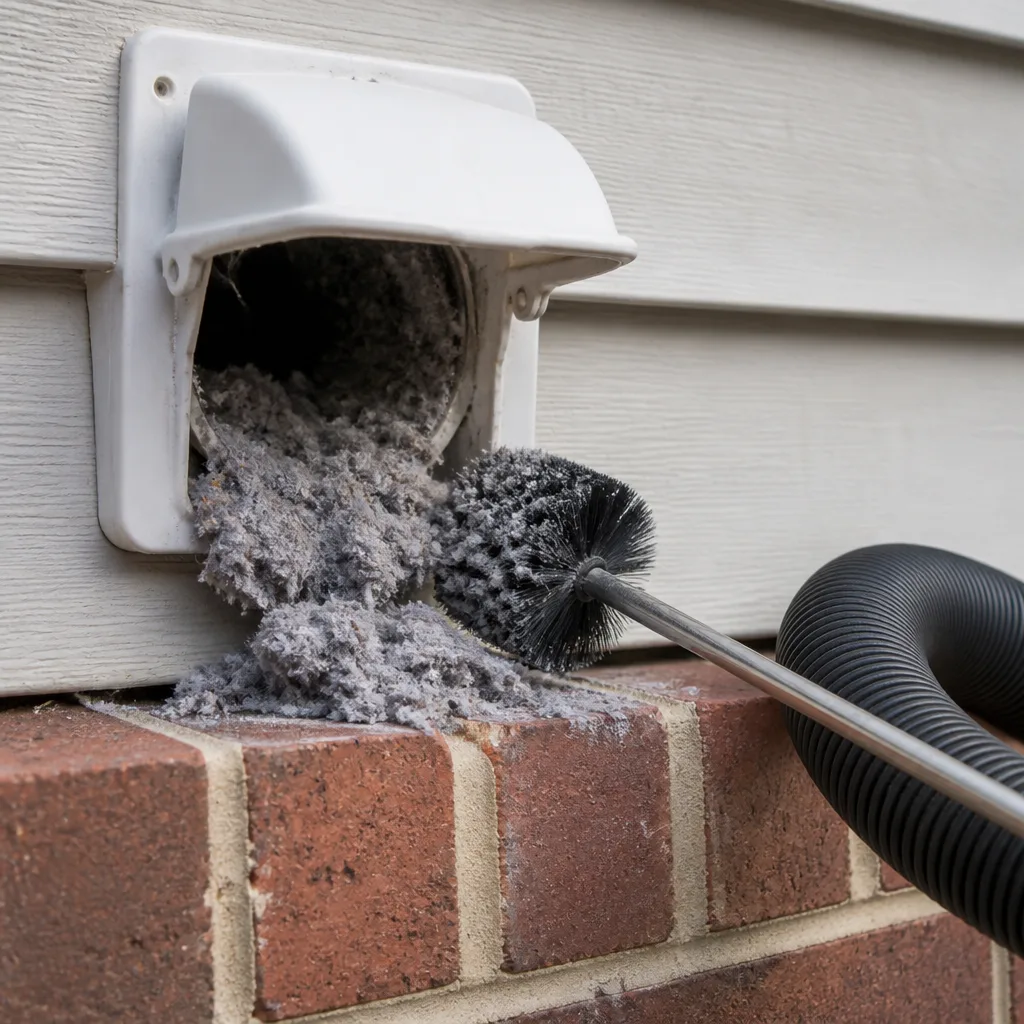 Dryer vent cleaning
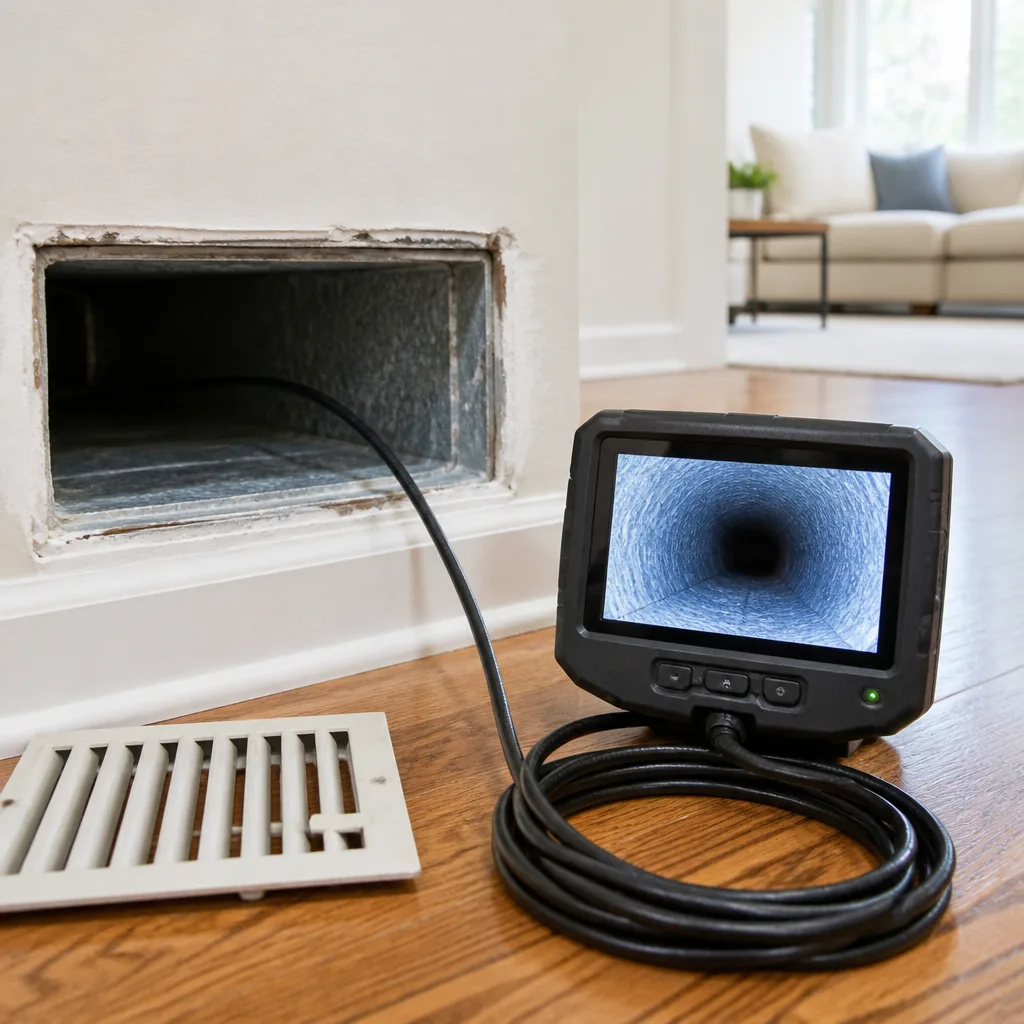 Camera inspection
 Sanitizing & deodorizing
Whole-system duct and dryer vent check with before-and-after photos - you see exactly what came out of your vents
That "$99 whole-house special" is a bait ad - the real number appears once they are in your hallway, or the "clean" is a shop-vac at the register. We photograph the inside of your ducts before and after instead.
DIY vs Professional Air Duct Cleaning: The Castle Rock Homeowner’s Decision Guide
Most homeowners picture duct cleaning as a giant vacuum snaking through their vents. The reality is that the dirt that changes your indoor air quality and drives up your energy bills lives far past the vent cover, in places no consumer tool can reach. A $150 dryer-vent-style kit from a home improvement store cleans roughly 18 inches into a register opening. The contamination that actually matters sits 6 to 40 feet deeper, at the trunk line, the plenum, and the equipment itself. This guide maps exactly what DIY can and can’t do in a Castle Rock home, which tasks are safe to handle yourself, and how to decide when it’s time to call a professional.
Quick Answer
DIY air duct cleaning works for surface upkeep: cleaning register grilles, replacing filters, and vacuuming return grilles. It does not work for the interior of the duct system, because consumer vacuums and brush kits physically cannot reach the trunk lines and plenum where contamination builds, and they can’t generate the negative pressure to remove it. If your home was built before 2005 or you’ve had recent renovations, professional cleaning is the realistic choice in Castle Rock.
Styles & brands we work with
- Whole-home duct cleaning
- Dryer vent cleaning
- Camera inspection
- Sanitizing & deodorizing
Table of Contents
- What DIY Tools Can Actually Reach
- What Professional Equipment Does That DIY Can’t
- The Jobs You Can Safely Do Yourself
- Fiberglass Duct Board: The Castle Rock Risk
- The Real Cost of a DIY Mistake
- A Three-Variable Decision Framework
- Why Castle Rock Climate Changes the Calculus
- Common Mistakes to Avoid
What DIY Tools Can Actually Reach
Before you decide, it helps to understand the geometry of a residential air system. Your ductwork is a network: the supply trunk carries conditioned air from the furnace or air handler, branch lines deliver it to individual rooms through wall and floor registers, and the return side pulls air back through return grilles. The system is measured in tens of feet, not inches.
A standard consumer duct brush kit reaches about 18 to 24 inches past the register opening, depending on the tool. That means the visible run of each branch line is reachable. What sits beyond that reach is not a small remainder. It’s most of the system.
- Registers and grilles: Reachable with a vacuum and brush. This is the easy win.
- Visible branch duct (first 18-24 inches): Partly reachable with a flexible brush. Contamination here is usually light.
- Full branch lines (6-15 feet): Unreachable with consumer tools. This is where dust settles and builds.
- Trunk lines and plenum: Completely unreachable. This is the highest-contamination zone.
- Air handler, blower, and evaporator coil: Unreachable and dangerous to open. This is professional territory.
- Return duct interior: Almost entirely unreachable without removing grilles and using flexible tools longer than a homeowner kit provides.
In our experience, this is where the DIY vs professional conversation actually lives. It’s not that a homeowner lacks the skill to run a brush. It’s that the brush cannot physically reach the contamination. Once you can picture where the dirt is, the decision gets a lot clearer.
What Professional Equipment Does That DIY Can’t
Professional air duct cleaning depends on two things a homeowner kit can’t supply: negative pressure and reach. Truck-mounted and high-capacity portable units generate the airflow and vacuum pressure needed to keep dislodged debris moving toward the collection point rather than into your living space. A consumer vacuum moves air at a fraction of that capacity. Consumer tools move dust; professional equipment removes it.
The systems used by Castle Rock Air Duct Cleaning Pros, like Rotobrush and Nikro, are the same commercial-grade brands used by HVAC contractors. They’re built to run rotary agitation, high-reach flexible whips, and negative-pressure hoses through a full system, not just the first couple of feet.
Here’s what professional cleaning includes that DIY cannot reproduce:
- Creating negative pressure at the system so dislodged debris is pulled to a collection source instead of pushed into rooms.
- Reaching the trunk line and plenum with tools long and flexible enough to cover the full run.
- Agitating and extracting buildup from branch lines using rotating brush heads matched to the duct material.
- Cleaning the air handler and blower safely, with proper electrical disconnection.
- Finding and sealing leaks that let unfiltered attic or crawlspace air into the system.
That last point matters more than most homeowners expect. Cleaning a system that leaks just means re-contaminating it faster. Our air duct cleaning service closes that loop, which is why Duct Repair & Sealing is a core service here, not something we tack on at the end.
The Jobs You Can Safely Do Yourself
There is real value in the tasks a homeowner can legitimately handle. DIY upkeep is not wasted effort. It just isn’t a substitute for interior cleaning. These are the jobs that don’t compromise system integrity:
- Cleaning register grilles and vent covers. Remove the cover, wash it in the sink or hose it off outside, and dry it fully before reinstalling. This alone improves visible dust and makes the room feel cleaner.
- Replacing HVAC filters. The highest-return task on the list. Check the filter every 30 to 90 days depending on occupancy, pets, and season. A clogged filter strains the system and circulates dust.
- Vacuuming return grilles. A brush attachment on a household vacuum pulls surface dust off the return grille face. It doesn’t clean the duct behind it.
- Wiping the supply register faces and surrounding wall. Dust streaks around a vent are surface deposits, not a sign the duct is full.
- Keeping the return path clear. Furniture, rugs, and storage blocking returns reduce airflow and can cause uneven delivery to rooms, which homeowners sometimes mistake for dirty ducts.
These tasks work well in a regular rotation. They do not remove debris from the interior of the system, and they won’t fix a musty smell in a specific room. If the goal is cleaner air, register cleaning buys time but doesn’t solve the underlying problem.
Fiberglass Duct Board: The Castle Rock Risk
This is the section most DIY guides skip, and it’s the one that matters most in an older Castle Rock home. Many homes built before 2005 use fiberglass duct board for a portion of the system, especially on trunk lines and returns. Fiberglass duct board is rigid insulation with a foil or coated facing on the inside. Its interior surface is a glass-fiber mat that must remain intact for the duct to work properly.
Consumer brushes and shop-vac attachments are the wrong tools for duct board. A stiff rotary brush or a vacuum head dragged across the interior surface can score or tear the facing. Once that facing is compromised, fiberglass fibers can enter the air stream, and every time the system runs, more of them move into the rooms.
This is one of the few clear answers in the DIY vs professional conversation:
- Metal ductwork tolerates some consumer-tool brushing without damage.
- Flexible duct can collapse or detach if a brush is pushed too hard.
- Fiberglass duct board requires a soft tool and low pressure, or the facing fails.
If you don’t know what kind of ductwork is inside your walls, that alone is a reason to have a pro take a look. Our technicians have up to 10 years of experience and can identify duct material on-site before any cleaning starts. It’s a two-minute check that saves you a much bigger problem. This is also why we treat HVAC cleaning as a material-aware job, not a one-size brush run.
The Real Cost of a DIY Mistake
The least visible risk of DIY duct cleaning isn’t the cleaning itself. It’s the connection. Flexible duct is joined to rigid boots and trunk fittings with tape, mastic, or zip ties. Pushing a brush through a flex run can loosen or disconnect one of those joints, and the disconnect is often invisible after the register cover goes back on.
Here’s what a disconnected joint actually does. Conditioned air escapes into an attic or wall cavity instead of reaching the room. The room feels cooler in winter and warmer in summer. The thermostat fights the loss, and energy bills climb. Because the escaping air is conditioned, the extra cost doesn’t show up as a dramatic spike; it shows up as a slow creep that many homeowners attribute to the season.
In the worst cases, the disconnected duct pulls unfiltered attic air into the system. That’s the opposite of the intended result. You tried to clean the ducts and instead introduced a new contamination path.
A professional cleaning avoids this risk for two reasons. First, the tools are matched to the duct type and connected to controlled pressure, not brute force. Second, and more importantly, checking every accessible duct connection is part of the job. We find the leak, then seal it. If a joint is failing, we address it, because a cleaned system with a leaking joint isn’t cleaned at all.
If you’re calling Castle Rock Air Duct Cleaning Pros after a DIY effort, tell us what you used. It changes what we look for first.
A Three-Variable Decision Framework
Rather than a rule of thumb, use three variables. Score your home honestly on each one. The combination tells you whether DIY is reasonable or whether a professional cleaning is the right call.
Variable 1: Home Age
- Built after 2010: Likely mostly metal or sealed flexible duct. DIY upkeep is reasonable. Professional cleaning depends on other triggers.
- Built 2005-2010: Mixed materials likely. Register cleaning and filters are fine. Interior cleaning is best left to a pro if there’s any contamination signal.
- Built before 2005: Higher chance of fiberglass duct board somewhere in the system. Professional inspection and cleaning is advisable when any contamination trigger is present.
Variable 2: Contamination Trigger
- Routine upkeep only: No musty smell, no visible dust streaks, no recent renovation. DIY upkeep is usually enough.
- Recent renovation: Drywall dust, sawdust, and construction debris get pulled into supply and return ducts almost immediately. Professional cleaning is the right call within a few weeks of finishing the work.
- New-to-you home: You don’t know the prior cleaning history. Professional cleaning resets the baseline.
- Pets, smoking, or persistent dust: Contamination load is higher than average. Professional cleaning interval should shorten.
Variable 3: Health Sensitivity
- No known sensitivities: DIY upkeep with annual professional cleaning if age and trigger point that way.
- Household allergies or asthma: Professional cleaning is favored, because the tasks DIY leaves undone are exactly the ones that affect air quality.
- Young children or immune-compromised household members: Professional cleaning and a look at filtration upgrades make sense. Brands like Honeywell and Aprilaire integrate with most systems.
If two or more variables point toward professional cleaning, that’s your answer for the next cleaning cycle. Afterwards, DIY upkeep covers the space between visits. Our dryer vent cleaning service fits the same logic: the parts of that vent a homeowner can reach aren’t where lint fires start.
Why Castle Rock Climate Changes the Calculus
Where you live affects how often a duct system needs attention. Castle Rock sits on the Palmer Divide at roughly 6,200 feet, and the climate here runs against Colorado’s Front Range reputation. Spring and early summer storms roll up the divide and bring moisture, then the air dries out hard in winter. Homes in Castle Rock cycle between a furnace running through cold snaps and air conditioning running through warm, stormy afternoons.
A few things follow from that:
- Swamp coolers are uncommon here. Most Castle Rock homes run a forced-air furnace and central air conditioning, so the duct system carries both heating and cooling air year-round. That means more hours of circulation and faster dust accumulation than a climate with a dedicated heating-only season.
- Winters are dry and dusty. Low humidity and wind across the divide kick up soil and dust around foundations. Any gap in the return-side ductwork, or a dirty filter, pulls that material straight into the air stream.
- Storm-season moisture gets into attics. A loose duct joint in an attic that sees spring and summer storms can pull damp air into the system. That’s where musty odors that seem to come from nowhere originate.
Castle Rock neighborhoods like The Meadows, Founders Village, and Castlewood Ranch run the age range from newer construction to homes that are well past the 2005 duct-board threshold. If you live near the older neighborhoods off Fifth and Perry Street, or in Castle Pines across the highway, the pre-2005 rule applies often enough to check it first.
Dryer vents need the same attention. Castle Rock’s dust and lint load means a dryer vent can accumulate faster than owners expect. Dryer vent cleaning is on our service list for a reason: it’s a fire-risk service most duct-only cleaners skip entirely.
Common Mistakes to Avoid
- Assuming a shop vac pulled through the register means the ducts are clean. The shop vac does what it can in the first foot or two. The rest of the system stays as it was, so the musty smell and dust return within weeks.
- Running a stiff brush through fiberglass duct board. Older Castle Rock homes often have duct board on trunk lines or returns. A rigid brush can score the interior facing and release fibers into the air stream. Use a soft tool or leave it to a pro.
- Pushing a brush through a flexible duct run with too much force. The connection at the boot can loosen or detach. The register cover goes back on, the disconnect becomes invisible, and energy bills creep up over the next season.
- Opening the air handler to “wipe it out.” The blower and coil are electrical components adjacent to a heating source. Touching them without disconnecting power is a serious safety risk.
- Skipping the filter change between cleaning attempts. A clean system with a clogged filter recontaminates in days. Filter discipline is the single highest-return habit in the whole system.
- Ignoring leaks after cleaning. A cleaned system with loose joints at the trunk line or plenum gets dirty again quickly, because unfiltered attic air finds the gap.
- Assuming a cheap coupon price covers the whole system. Per-vent pricing means the technician quotes the work once they’re in the door. Whole-system pricing agreed before work starts avoids that trap.
See the difference
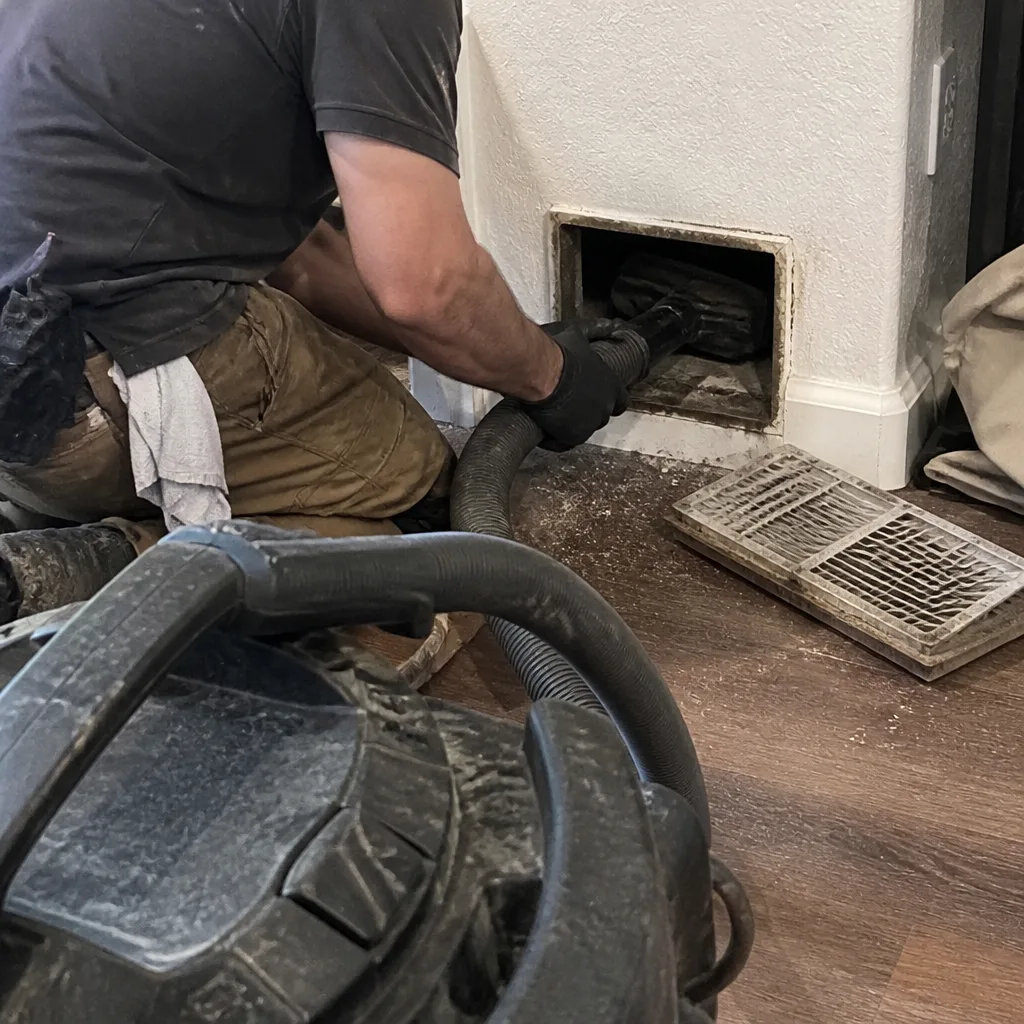 Before
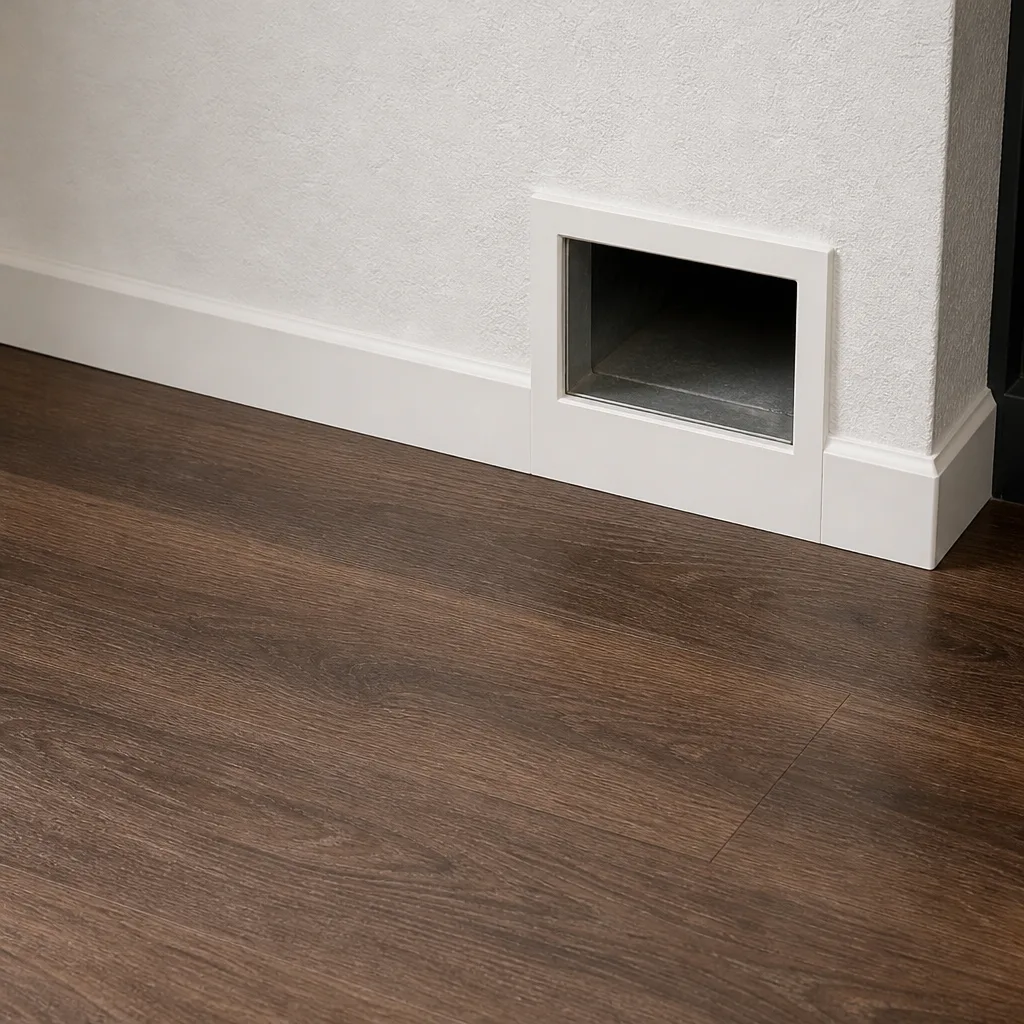 After
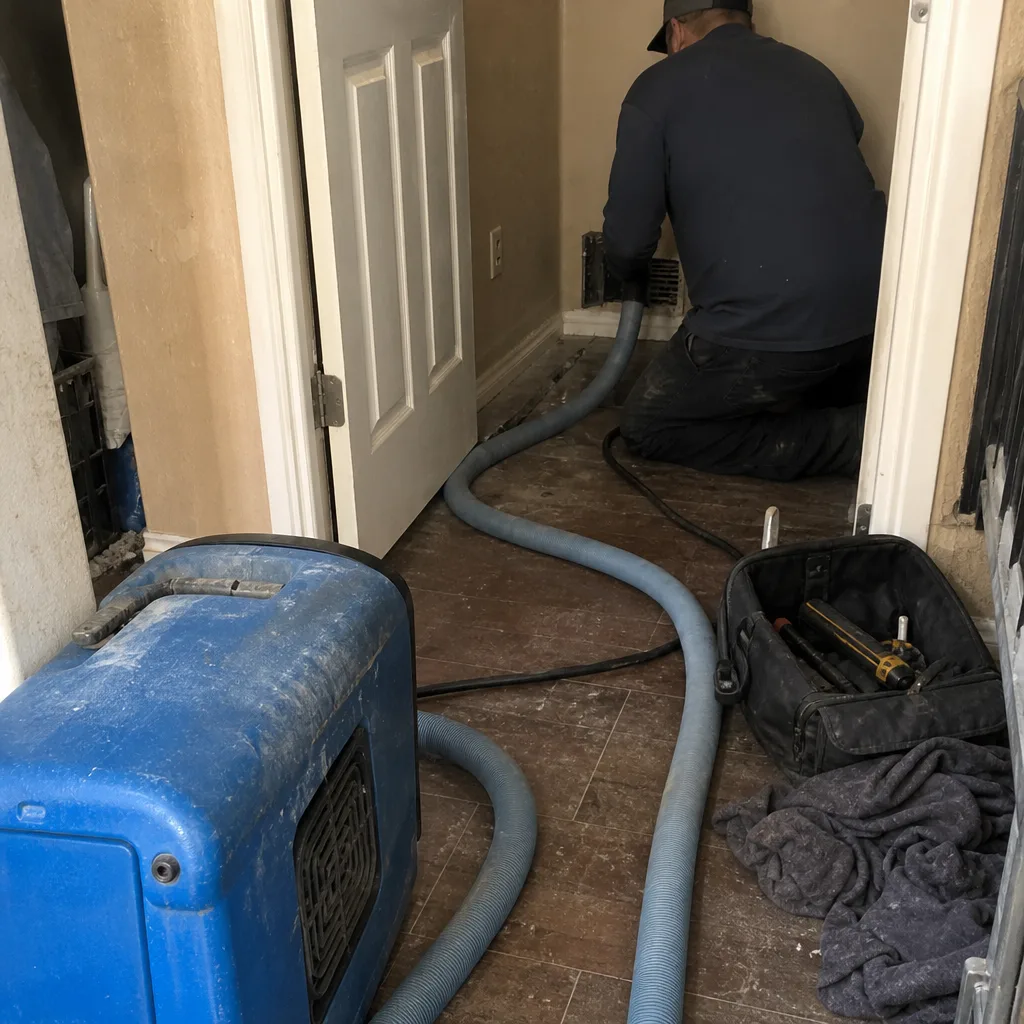 Before
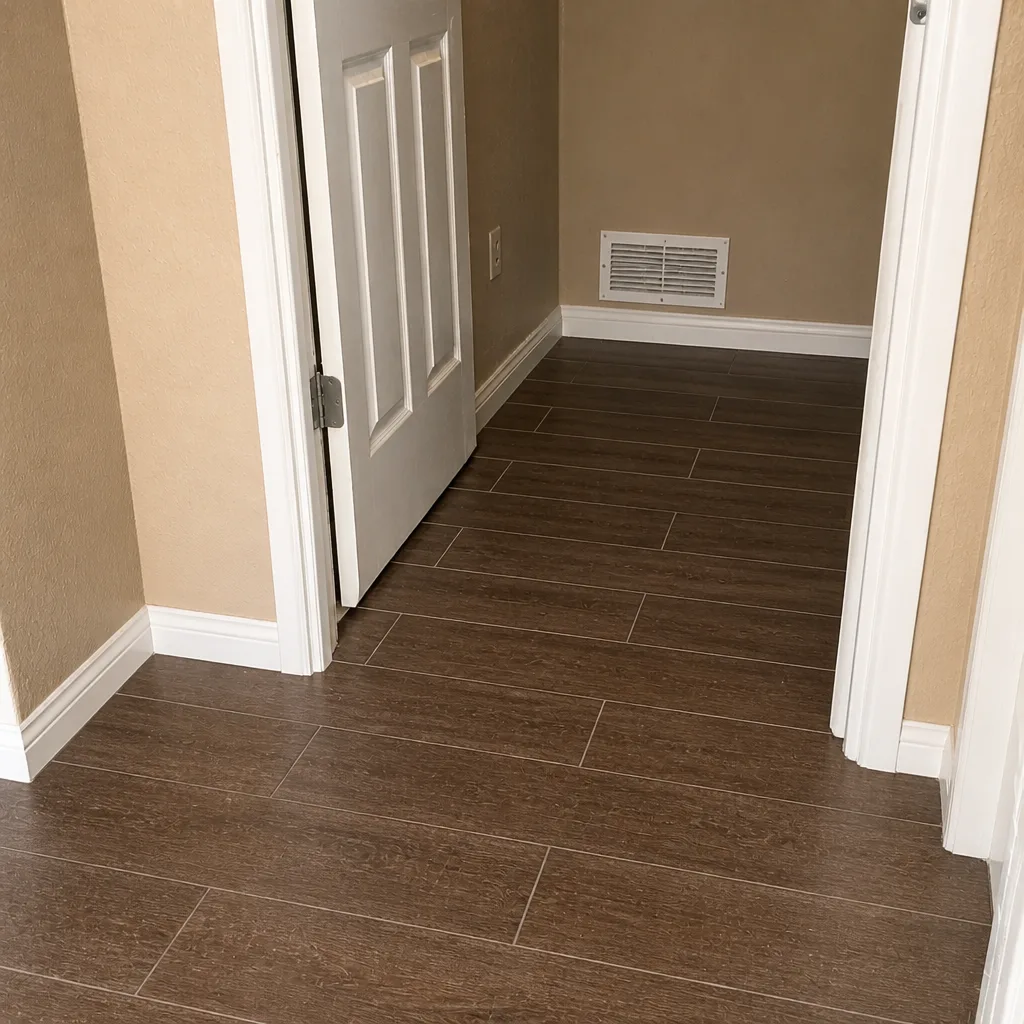 After
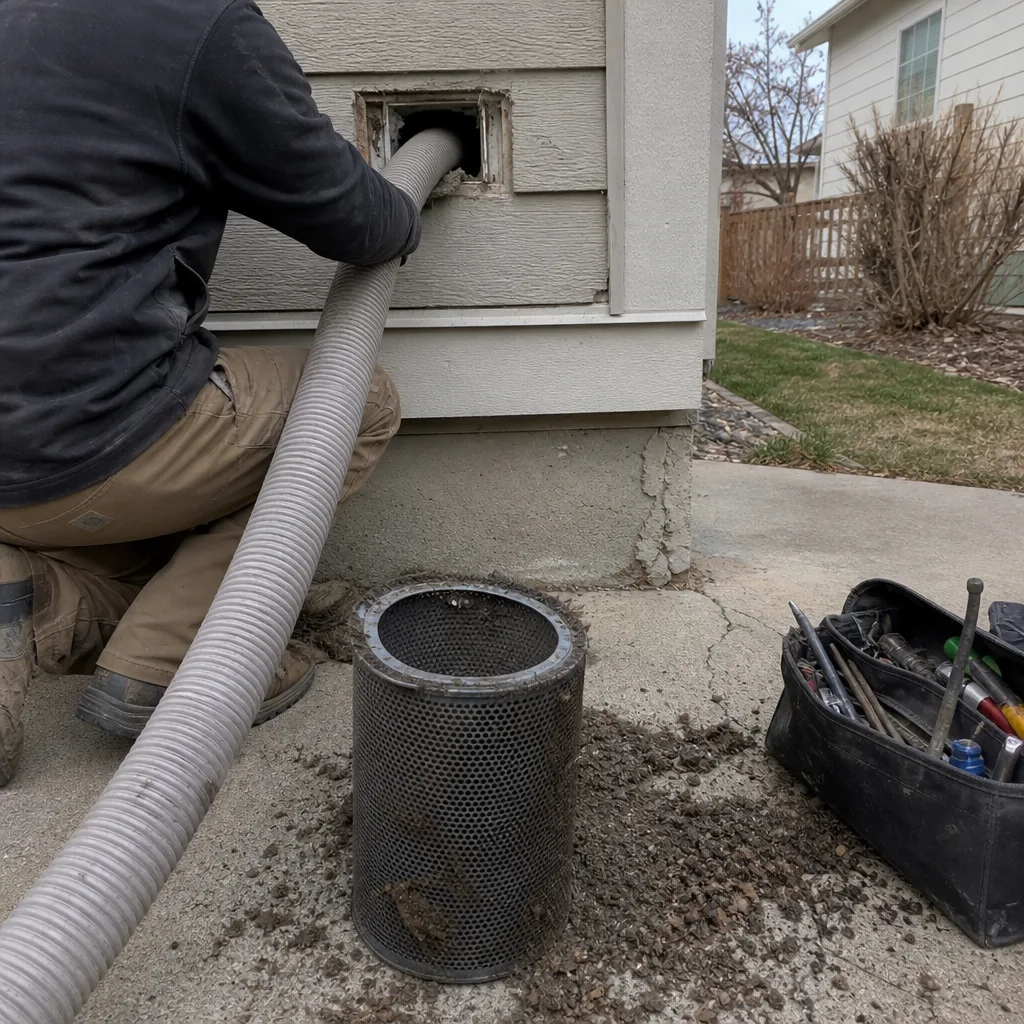 Before
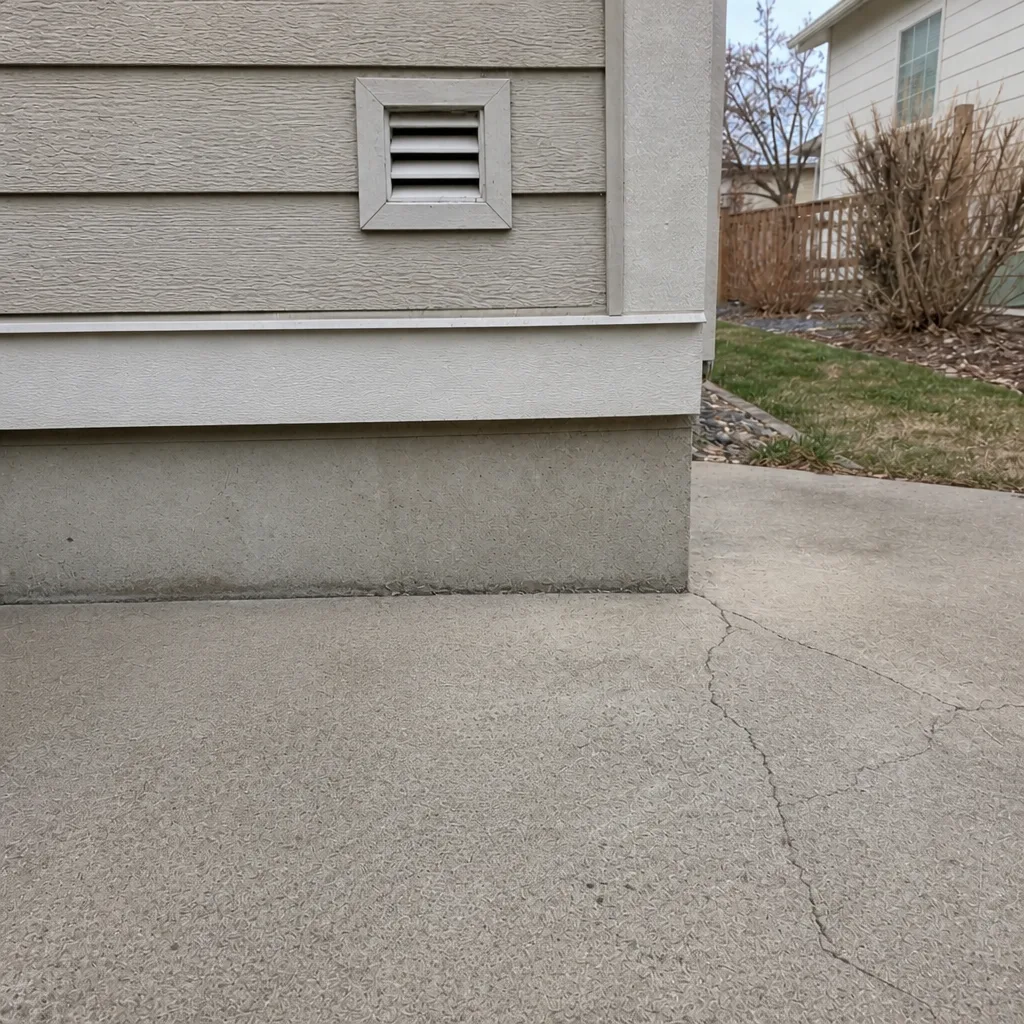 After
When to Call a Professional
Call a professional when any of these are true in your Castle Rock home: the house was built before 2005, you’ve had a renovation in the last six months, you’re noticing a musty odor from specific vents, one or more rooms have noticeably weaker airflow than the rest of the house, household members with allergies or asthma have gotten worse, or you simply don’t know the last time the system was cleaned. It’s also the right call if a dryer takes longer than it used to, which usually means a clogged dryer vent. Castle Rock Air Duct Cleaning Pros offers free estimates and one flat price per system agreed before work starts. Call (877) 492-1837. We answer 24/7. Fast dispatch from 7am to 7pm, Sunday through Friday.
Frequently Asked Questions
Pricing depends on system size, the number of supply and return registers, and whether the ductwork needs repair or sealing. Most homes fall into a range with a single whole-system price rather than a per-vent charge, and the written estimate sets the final price before work starts. Call (877) 492-1837 for an exact quote, which is free.
The cheapest quotes almost always price per vent and cover only the visible run of each branch line, which is the part a homeowner could handle with a consumer kit. Whole-system cleaning costs more because it includes the trunk line, plenum, and air handler, and takes longer equipment time. If a quote doesn’t mention those parts of the system, ask. Call (877) 492-1837 to compare against a full-system estimate.
Before-and-after photos of your own ducts and air handler, taken during the job, are the simplest verification. A technician should be willing to show you the trunk line and plenum they cleaned, not just confirm the register covers went back on. We document the work with photos as part of every cleaning, and we’re happy to walk through what we found. Call (877) 492-1837 with any questions.
For most Castle Rock homes, a full professional cleaning every three to five years fits the climate and housing stock, with DIY upkeep (filters, register grilles, return grilles) in between. Homes with pets, recent renovation, or a household member with asthma should shorten that interval. There’s no reason to clean more often than the system accumulates buildup. Call (877) 492-1837 if you’re not sure where your home falls.
No. Fiberglass duct board has a coated interior facing that must stay intact, and consumer brush kits can score or tear it, releasing fibers into the air stream. If your Castle Rock home was built before 2005, assume some part of the system is duct board until someone checks. Our technicians have up to 10 years of experience identifying duct material on-site. Call (877) 492-1837 to schedule an inspection.
Yes, especially if drywall work was involved. Drywall dust and sawdust are drawn into supply and return ducts almost immediately, and they accumulate at the trunk line and plenum where consumer tools can’t reach. Schedule cleaning within a few weeks of finishing the work. Call (877) 492-1837 for a free estimate.
The Bottom Line
DIY air duct cleaning has a role, but it’s a narrow one: registers, filters, and return grilles. Everything past the first couple of feet of each branch line requires negative pressure, reach, and duct-material awareness that consumer tools can’t provide. In Castle Rock, the pre-2005 fiberglass duct board question and the dry, dusty winter climate both push the balance toward professional cleaning. The decision comes down to three variables: home age, contamination trigger, and health sensitivity. When two of those point toward a pro, the answer is clear. And once a system is clean, keeping it that way is mostly about filter discipline and sealing leaks before they undo the work.
Castle Rock Air Duct Cleaning Pros handles the whole system in one visit: cleaning with commercial-grade Rotobrush and Nikro equipment, duct repair and sealing, and air quality sanitizing finished to Guardsman-level protection standards, with filtration upgrades through Honeywell and Aprilaire where they fit. One flat price per system agreed before work starts, and before-and-after photos of your own ducts. If you’ve been weighing the DIY question, we’re happy to walk your system with you and give you an honest answer. Call (877) 492-1837 for a free estimate. We answer 24/7. Fast dispatch from 7am to 7pm, Sunday through Friday.
Learn more about Castle Rock Air Duct Cleaning Pros or book your free estimate today.
Written by the team at Castle Rock Air Duct Cleaning Pros.