
Last updated November 25, 2026
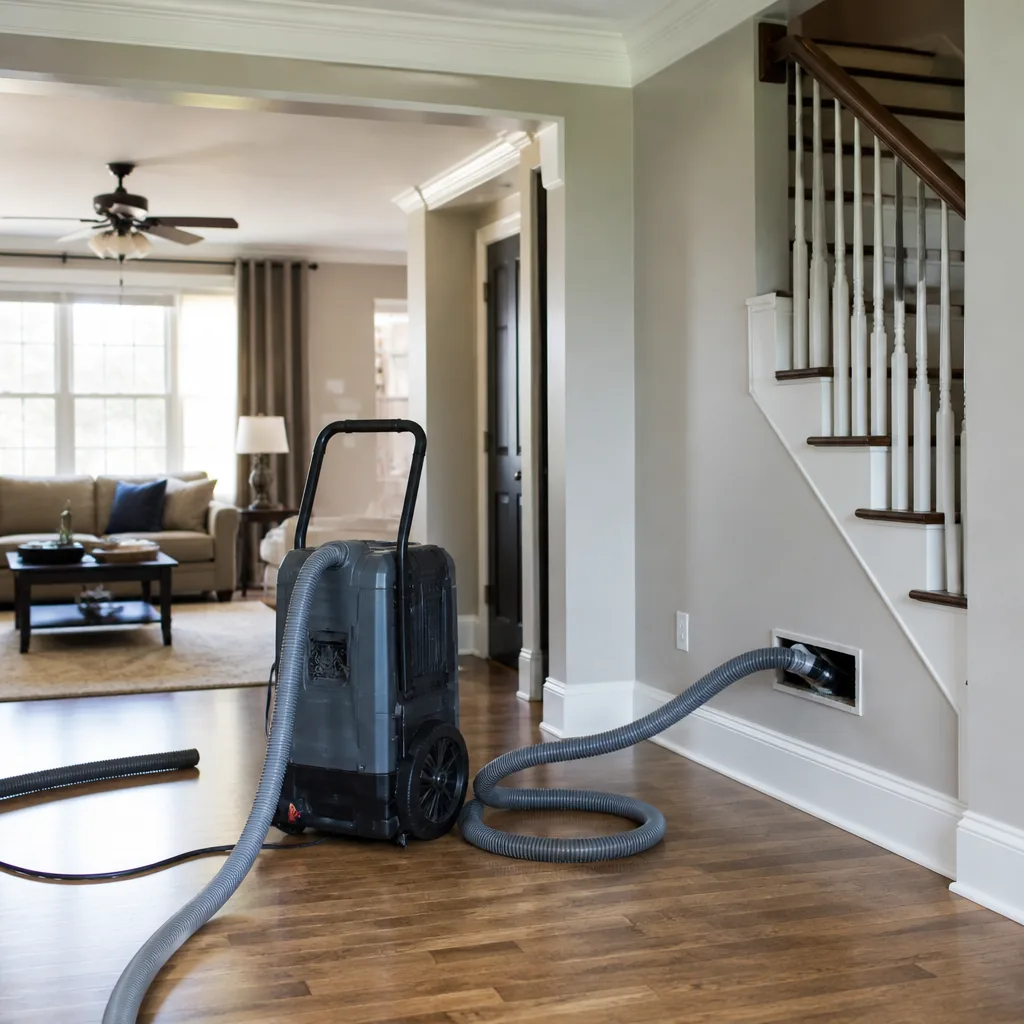 Whole-home duct cleaning
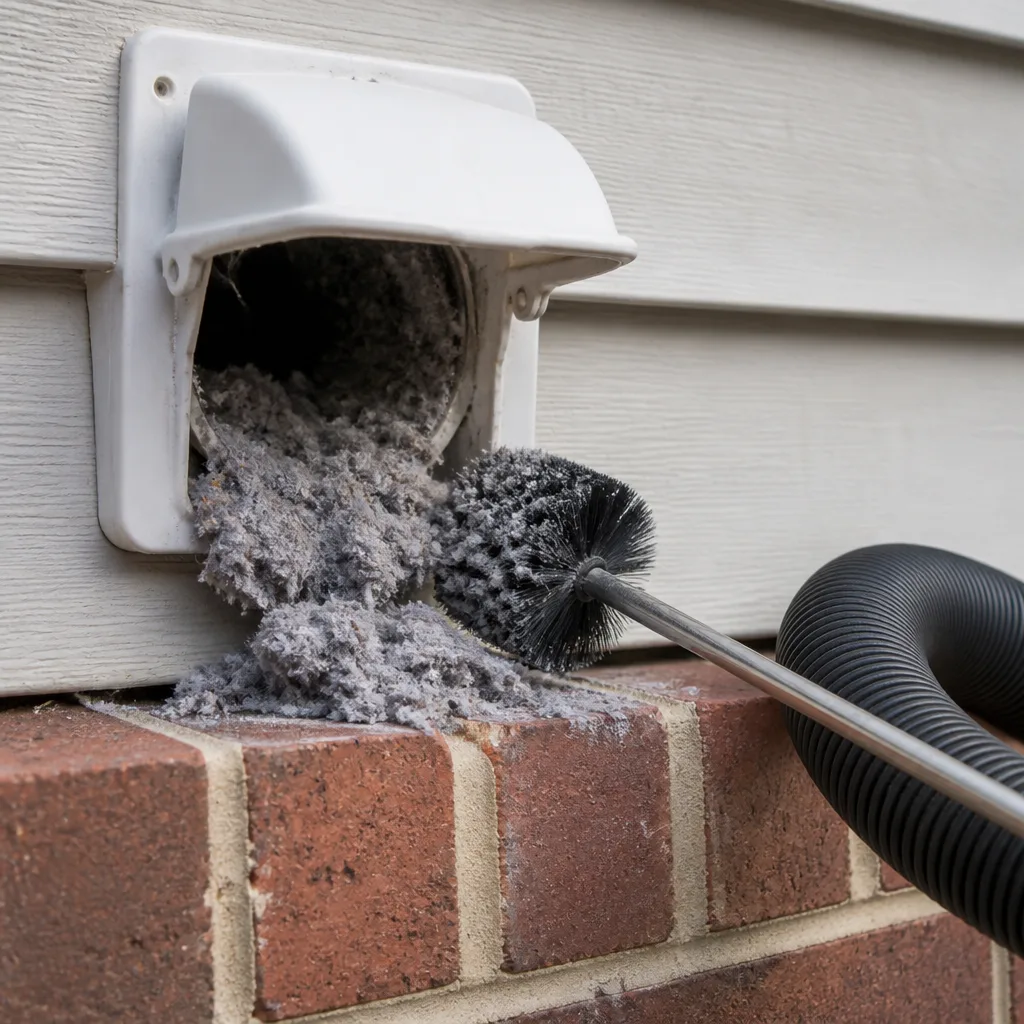 Dryer vent cleaning
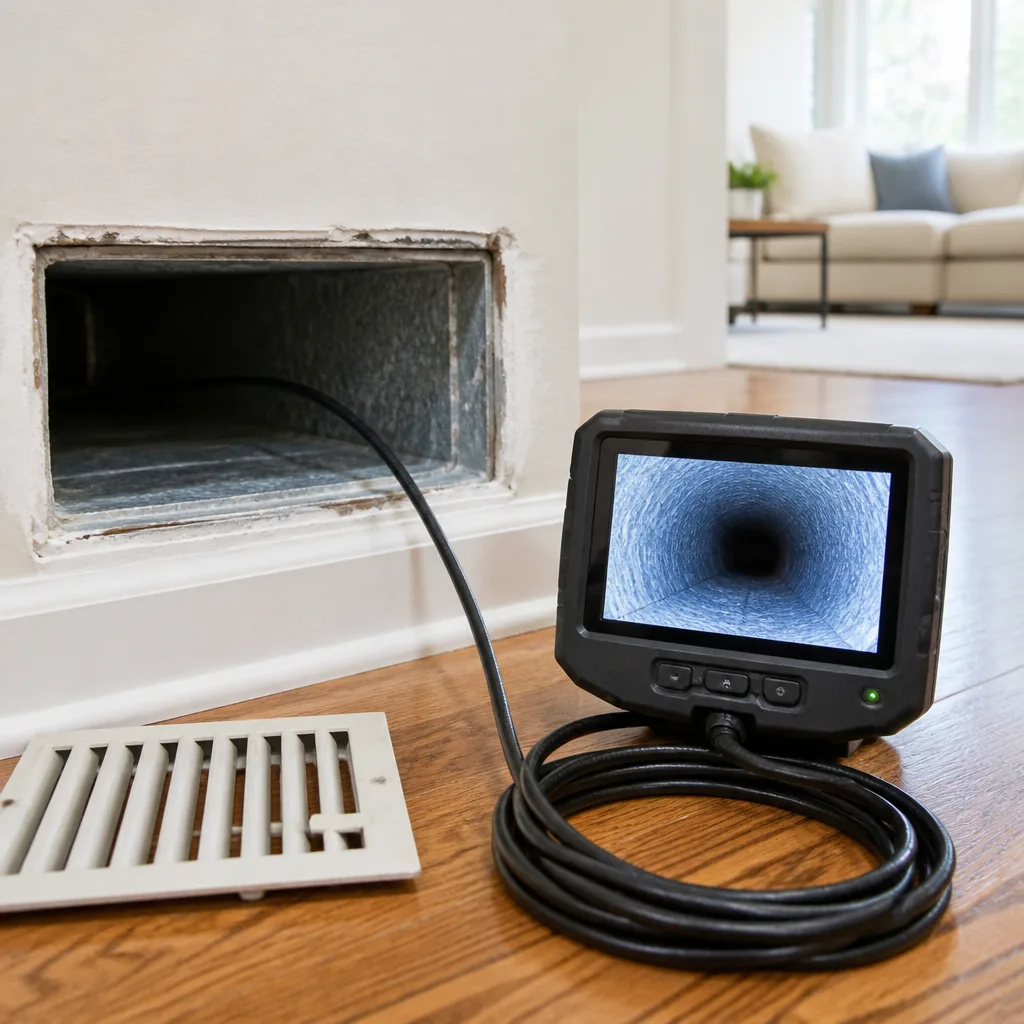 Camera inspection
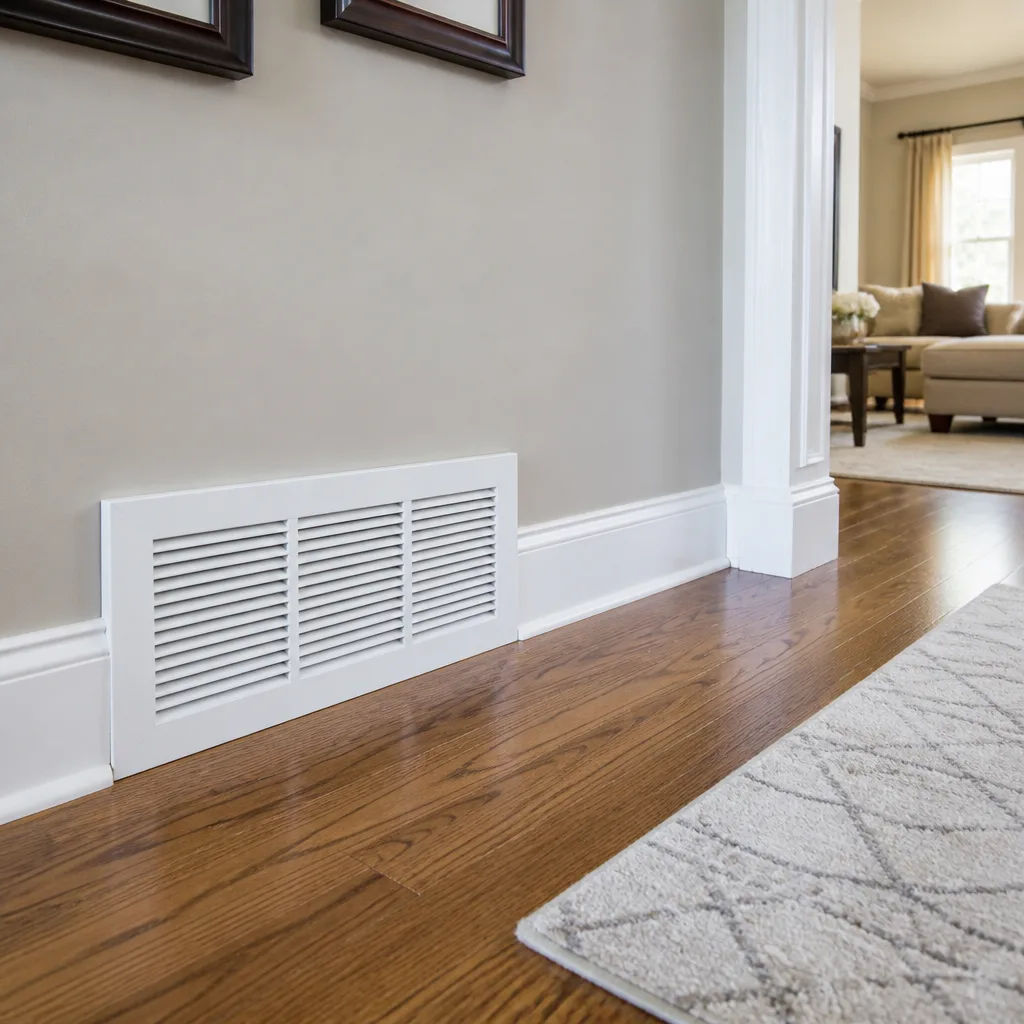 Sanitizing & deodorizing
Whole-system duct and dryer vent check with before-and-after photos - you see exactly what came out of your vents
That "$99 whole-house special" is a bait ad - the real number appears once they are in your hallway, or the "clean" is a shop-vac at the register. We photograph the inside of your ducts before and after instead.
Seasonal Air Duct Cleaning Care for Castle Rock: Year-Round Homeowner’s Guide
Most homeowners treat duct cleaning as a once-every-few-years chore with no calendar attached. That approach misses what’s actually happening inside the system. Castle Rock’s seasons each push a different kind of contamination into your ducts, and the timing of when that material lands matters as much as how much of it there is. Wildfire smoke season doesn’t behave like pollen season, and the dry, high-altitude winter here doesn’t foul ductwork the same way a humid climate does. This guide walks through what each season brings, how to read the triggers that tell you it’s time to act, and how to build a 12-month care plan around your home instead of a generic reminder.
Quick Answer
Seasonal air duct cleaning in Castle Rock works best when you match cleaning and maintenance to what each season actually deposits in your system: cottonwood pollen and furnace soot in spring, wildfire smoke particulate in summer, furnace-startup dust and odors in fall, and static-charged dust from dry winter air. A full-system cleaning in late spring, a post-smoke inspection when wildfire season ends, and a pre-heating-season check in early fall cover the main contamination windows far better than an arbitrary annual reminder.
Styles & brands we work with
- Whole-home duct cleaning
- Dryer vent cleaning
- Camera inspection
- Sanitizing & deodorizing
Table of Contents
- Why Castle Rock’s Seasons Matter Inside Your Ducts
- Spring: Pollen, Soot, and the Highest-Intake Window
- Summer: Wildfire Smoke, PM2.5, and Filtration Gaps
- Fall: Furnace Startup and the Odor Window
- Winter: Dry Air, Static Dust, and Accelerated Fouling
- How to Build a 12-Month Care Calendar
- Why the Whole Air Pathway Matters, Not Just the Vents
- Timing Your HVAC Cleaning Around the Seasons
Why Castle Rock’s Seasons Matter Inside Your Ducts
Your duct system is a slow-moving collection box. Air returns from the rooms, passes through the filter, runs across the furnace coil and blower, and gets pushed back out. Whatever is suspended in the air outside or generated inside eventually passes through that loop, and some of it deposits on the walls of the ducts, on the coil, and on the blower wheel. That’s normal. What varies is the composition of that buildup, and in Castle Rock the composition changes sharply from season to season.
Cottonwood fluff fills the air in late spring. Wildfire smoke rolls down the Front Range in summer. The first furnace heat cycle in fall burns off months of settled dust. Winter air is dry enough up here at elevation to make dust cling through static rather than settle quietly. Four seasons, four different problems, and each one calls for a slightly different response.
A single annual cleaning doesn’t fit this pattern well. If you clean in August, you clean right after smoke season pushed particulate into your return ducts but before the furnace startup in October deposits its own layer of soot. If you clean in April, you clear the winter buildup but leave the whole smoke season ahead. The better approach is to align the work with the calendar instead of forcing the calendar to fit a fixed schedule.
This is what we mean when we talk about cleaning the whole system, not just the visible vents. The job isn’t a vacuum pass over the grilles. It’s understanding what’s traveling through the system and when.
Spring: Pollen, Soot, and the Highest-Intake Window
April and May are the highest-contamination intake window in Castle Rock return ducts. That surprises some homeowners, who assume summer is heavier because of smoke. The reason spring wins is that two sources stack on top of each other: the soot and dust that built up through a full winter of furnace cycles, and the heavy airborne load of cottonwood pollen that arrives as soon as the trees open.
Cottonwood pollen doesn’t stay outdoors. It’s fine material, and it draws into the intake every time the system runs for cooling or a spring cold snap. The standard MERV-8 filter most homes use catches the larger particles but lets the finer fraction through, and that fraction deposits on the return duct walls and around the filter slot. If you’ve noticed a gray film near the filter frame in spring, that’s the fine material that got past the filter and stuck.
The furnace soot side of the equation is subtler. A gas furnace running all winter produces very little visible soot when it’s operating correctly, but it does produce fine dust from the burners and from the air being pulled across a warm heat exchanger. That material settles on the inside of the supply plenum and the first several feet of supply trunk. When spring cooling starts, the blower pushes that settled layer back into the living space.
The spring response looks like this:
- Check the filter. If it’s loaded, replace it before you turn on cooling for the season.
- Inspect the filter slot and the return plenum for visible film or buildup.
- Schedule a full-system cleaning in late April or early May, before cottonwood season peaks around late May.
- Consider a filter upgrade if your system has less than a MERV-11 slot, especially if anyone in the household has seasonal allergies.
Spring is also the right window to look at the ductwork itself. Winter temperature swings work on joints and seams, and small leaks that develop over a heating season are easier to find and seal in spring than in the middle of cooling season. Our air duct cleaning work in Castle Rock routinely turns up leaks at the plenum connection and at trunk-to-branch fittings, which is why we handle duct repair and sealing as part of the same visit rather than sending you to a second contractor.
Summer: Wildfire Smoke, PM2.5, and Filtration Gaps
Castle Rock can see some of the heaviest wildfire smoke concentrations on the Front Range during July and August. Smoke doesn’t stay outside. It enters through return air, and the particle size that makes smoke so bad for lungs (the fine particulate fraction) is also the size that slips through a standard filter. A MERV-8 filter catches the larger smoke ash particles but passes most of the fine material, which means the fraction that deposits inside your ducts, on your coil, and on your blower wheel is exactly the fraction you’d most want to keep out of the system.
Two things determine how much smoke particulate actually lands inside the ductwork. The first is filter rating. The second is how well the filter is seated. A filter that’s slightly undersized for its slot, or that’s been pushed back by airflow, lets air bypass the media entirely. That bypass matters more in smoke season than any other time of year.
What a smoke-season response looks like:
- During heavy smoke events, keep windows closed and run the system on fan-only or with a low-speed continuous setting so the filter is actually working.
- Check that the filter is seated correctly in its slot and not been blown out of position.
- Consider upgrading filtration. Honeywell and Aprilaire filtration products are what we install and service, and a properly sized media cabinet holds a higher-MERV filter without choking airflow the way a thin 1-inch filter would.
- After the smoke season ends, schedule an inspection of the coil and blower wheel. Fine particulate that bypasses the filter accumulates on both, and a dirty coil means the system works harder to cool the house.
Air quality sanitizing is worth considering after a heavy smoke year. Smoke leaves odor compounds behind in the duct lining, and the musty, campfire smell that lingers in some homes after a bad fire season is a sign that material has settled and needs more than a vacuum pass. Abatement Technologies products are what we use in these cases to address the source rather than mask it.
One thing to plan around: cooling season in Castle Rock is when the system runs the most, and that’s the worst time to pull it apart for a full cleaning. A post-smoke inspection in September, once fire season winds down and before the furnace starts, is usually a better window than trying to squeeze it in during July.
Fall: Furnace Startup and the Odor Window
The first heat cycle of the season is when most odor and dust complaints in Castle Rock start. The house has been on cooling for three to four months, the ducts have collected fine particulate from a summer of smoke and dust, and then the furnace kicks on for the first cold night. It heats all that settled material, and the blower pushes it through the supply side into every room. The result is a burnt-dust smell and a fresh layer of fine dust on the furniture.
This is also when hidden problems surface. A return duct that separated slightly over the summer may now be pulling air from a crawlspace or garage rather than from the living area. A coil that collected fine particulate during smoke season now runs with reduced airflow, which means the furnace has to work harder and the heat exchanger runs hotter. An October startup with no preparation is how small issues become repair calls in January.
Before the first heat cycle, do these four things:
- Replace the filter. Even if it “looks clean,” a summer of smoke load can blind a filter without showing obvious buildup.
- Look at your return grilles. If you see dust streaks around the edges, air is bypassing the filter somewhere.
- Schedule a full-system cleaning in September or early October, before heating season starts. This is the single biggest step you can take to avoid the startup odor problem.
- Have the ductwork checked for leaks at the plenum, trunk, and branch connections. Sealing leaks before heating season saves energy all winter.
This is where HVAC cleaning differs from duct-only cleaning. The coil and blower wheel see the heaviest contamination load of the year by September. Cleaning the ducts without cleaning the components upstream only solves half the problem, because the blower will re-contaminate the supply side within the first few weeks.
Winter: Dry Air, Static Dust, and Accelerated Fouling
Winter air in Castle Rock dries out, and dry air changes how dust behaves inside the system. In a humid climate, dust particles pick up moisture and clump. Here, they stay dry and light, and they pick up static charge from moving through the ductwork. Charged particles cling to the duct walls rather than settling or getting carried out. The practical result is that dust that would fall out of the air elsewhere sticks to the inside of your ducts and plenum here, which means the same dust load fouls the system faster.
Heating itself is a source. Every heating cycle brings more fine dust off the burners and the heat exchanger area. In a typical Castle Rock winter, the furnace cycles many times per day. That’s a lot of heated air passing across a lot of dry dust.
Winter responses that make a real difference:
- Consider a humidifier. Aprilaire humidification products integrate with your existing system, and bringing interior humidity up to a normal range reduces static cling inside the ductwork and improves comfort noticeably at the same time.
- Change filters on a short interval during heating season, not a long one. A filter that’s adequate in July is a restriction in January.
- Look for the tell-tale static dust on the return grille. If you can write your name in the dust on the grille face, you have above-average loading inside the return.
- Don’t skip the winter system check if you’ve had a renovation. Drywall dust from a kitchen or bathroom remodel during winter has nowhere to go but into the return, and that material is abrasive to the blower wheel.
Winter is the least popular time to schedule duct cleaning, and the least convenient for a homeowner. It’s also the season that quietly adds the most contamination to the system in this climate. A mid-winter filter change and a post-renovation cleaning are the two winter actions that most protect your system. Full cleanings can wait for spring if the system isn’t showing problems, but the filter can’t.
How to Build a 12-Month Care Calendar
A generic monthly reminder doesn’t help, because most months have nothing to trigger. The better approach uses events rather than dates: a measurable threshold or a specific occurrence that tells you it’s time to act. Here’s the framework we recommend to homeowners in Castle Rock, built around triggers rather than arbitrary dates.
The trigger-based 12-month plan
- Filter change trigger: Replace or have the filter replaced every 60 to 90 days during heating and cooling season, and immediately after any AQI event above 100 that lasts more than a couple of days.
- Spring cleaning trigger: Late April or before the first cooling run of the year, whichever comes first. This clears the winter soot layer before cottonwood pollen loads the system.
- Post-smoke inspection trigger: After the first significant wildfire smoke event of the summer, or by late August regardless, check the filter, the coil, and the blower wheel.
- Pre-heating inspection trigger: Before the first cold night in September or early October that calls for heat. If you’re not sure when that will be, schedule the appointment for the first half of September and you’ll be ahead of it.
- Renovation trigger: Any drywall, flooring, painting, or kitchen or bath remodel that involves dust. Schedule a post-renovation cleaning once the dust has settled and the work is complete.
- Odor trigger: Any musty, stale, or burnt smell from a supply vent. Odor is the clearest early sign that something inside the system needs attention.
- Degree-day trigger: If you don’t want to watch the calendar, watch your utility bill. A sudden rise in heating or cooling cost for the same setpoint and same number of days usually means airflow is restricted somewhere, and restricted airflow often starts with a dirty coil or blower.
- Allergy trigger: If symptoms get worse inside the house than outside, the air quality in the system is worth investigating before assuming it’s a seasonal pollen issue.
Written out, the calendar fits on one page. You’re not scheduling twelve monthly cleanings; you’re watching for a handful of specific signals and acting when one fires. That’s how seasonal care actually works in Castle Rock, where the trigger events line up predictably with the weather rather than with a date on the wall.
Why the Whole Air Pathway Matters, Not Just the Vents
Vents are what you see, and vents are where a lot of duct-cleaning work starts and stops. That’s the visible end of the system. The problem is that the contamination that matters most is upstream: on the coil, on the blower wheel, on the walls of the trunk ducts, and in the plenum that connects the equipment to the ductwork. A vacuum pass over the vent faces doesn’t touch any of it, and within a few weeks of use the blower pushes fresh material back out.
A full-pathway cleaning moves in the opposite direction. The system is cleaned from the equipment outward, with the source components cleaned before the duct runs and vents, and with negative pressure maintained so loosened material gets carried out rather than into the living space. That’s the difference between commercial-grade equipment and a rental unit: the Rotobrush and Nikro systems we run are the same class of equipment professional HVAC contractors use, because residential contaminants need commercial-grade extraction to move. Commercial-grade equipment, residential pricing is how we think about it.
The pathway matters in another way. Contaminants don’t stop at the vent. If a duct joint has separated, air from a crawlspace, garage, or unconditioned attic space gets pulled into the system instead of return air from the living area. Cleaning without repairing the leak just gives you a clean system that re-contaminates within a season. We find the leak, then seal it, which is why duct repair and sealing is a core service here rather than an upsell tacked on at the end.
Dryer vents belong in this conversation too. They’re the fire-risk piece many duct-only cleaners skip, and they clog the same seasons that ducts do: lint accumulation through winter furnace cycles, and dryer use going up through fall and winter. dryer vent cleaning fits naturally into a fall inspection, and having one company handle the full air path from the HVAC cabinet to the vent cap means nobody has to explain the system to a second visit.
Timing Your HVAC Cleaning Around the Seasons
The best time to schedule a full cleaning of the HVAC unit and ductwork in Castle Rock is late spring and early fall. Spring cleaning precedes the cooling season, clears winter buildup, and gives you a fresh system before cottonwood pollen and smoke load. Fall cleaning precedes the furnace startup, clears the summer contamination, and prevents the burnt-dust odor most homes get in October.
If you can only do one, do the fall one. The furnace startup is a hard trigger: the system will run, the settled material will burn, and the whole household will notice. The spring cleaning is important, but a missed spring is not the same problem as a missed fall.
Some months are genuinely inconvenient. Outdoor crews can’t work as comfortably during cold snaps, and family schedules get tight around the holidays. A cleaning scheduled for the middle of July is possible, but the system is running full-time, and pulling it apart during cooling season has to be timed carefully to avoid comfort issues. Late April, September, and early October are the low-friction windows. That’s also when most homeowners in Castle Rock actually schedule, so booking in advance of those windows helps.
Our technicians have up to 10 years of experience, and the timing conversation is usually shorter when you call before the season starts rather than after problems show up. If you’re unsure whether your system needs a full cleaning, an inspection will tell you. The estimate is free, and it’s set per job by a written estimate before any work starts.
Common Mistakes to Avoid
- Cleaning on a fixed annual schedule instead of on triggers. A duct system cleaned every August is cleaned right after smoke season and right before furnace startup, which is the worst of both windows. Match the cleaning to what’s actually in the system.
- Skipping the filter during smoke season. Smoke particulate that bypasses a filter goes straight to the coil and blower, which is a much bigger cleaning job than a filter change. During any sustained AQI event, check the filter more often, not less.
- Cleaning the ducts without touching the coil and blower. The upstream components are the single biggest source of re-contamination. If the coil and blower wheel aren’t cleaned as part of the service, the ducts will look like they haven’t been touched within a season.
- Cleaning without repairing leaks. A cleaning with an open leak at the plenum is a cleaning that gets undone by the next snowmelt or crawlspace infiltration event. Repair and seal first, or as part of the same work.
- Forgiving the dryer vent. Winter is when the dryer vent fills up, and the lint has nowhere to go. This is a fire-risk piece and most duct-only cleaners skip it.
- Over-sizing the filter in a slot that can’t take it. A generously sized filter in an undersized slot will flex out of position and bypass. If you have a thin 1-inch slot, upgrading to a media cabinet sized for a high-MERV filter is more useful than stacking thin filters.
- Assuming the house is just dry in winter. Castle Rock winters are dry, but static dust on the return grille and dry air that won’t resolve with a humidifier are signs the system has more contamination than the humidifier can offset.
See the difference
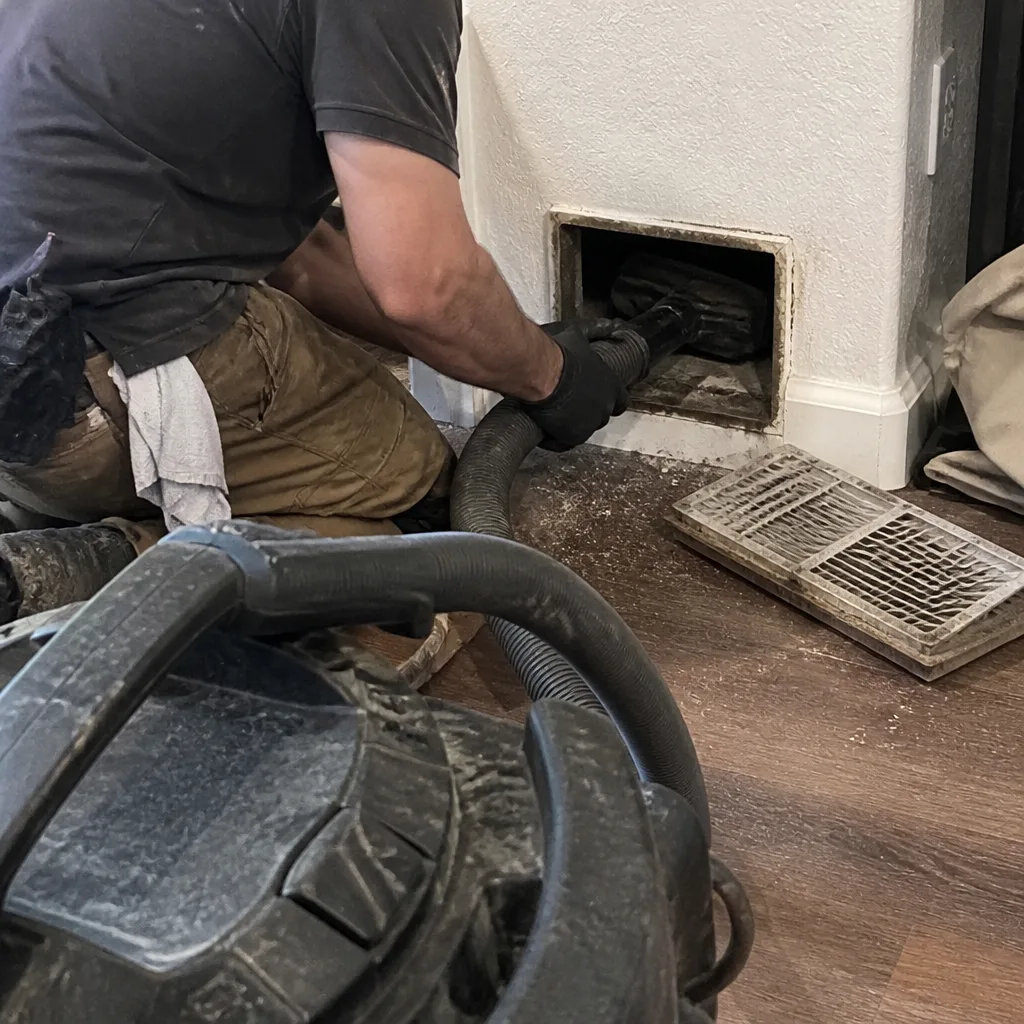 Before
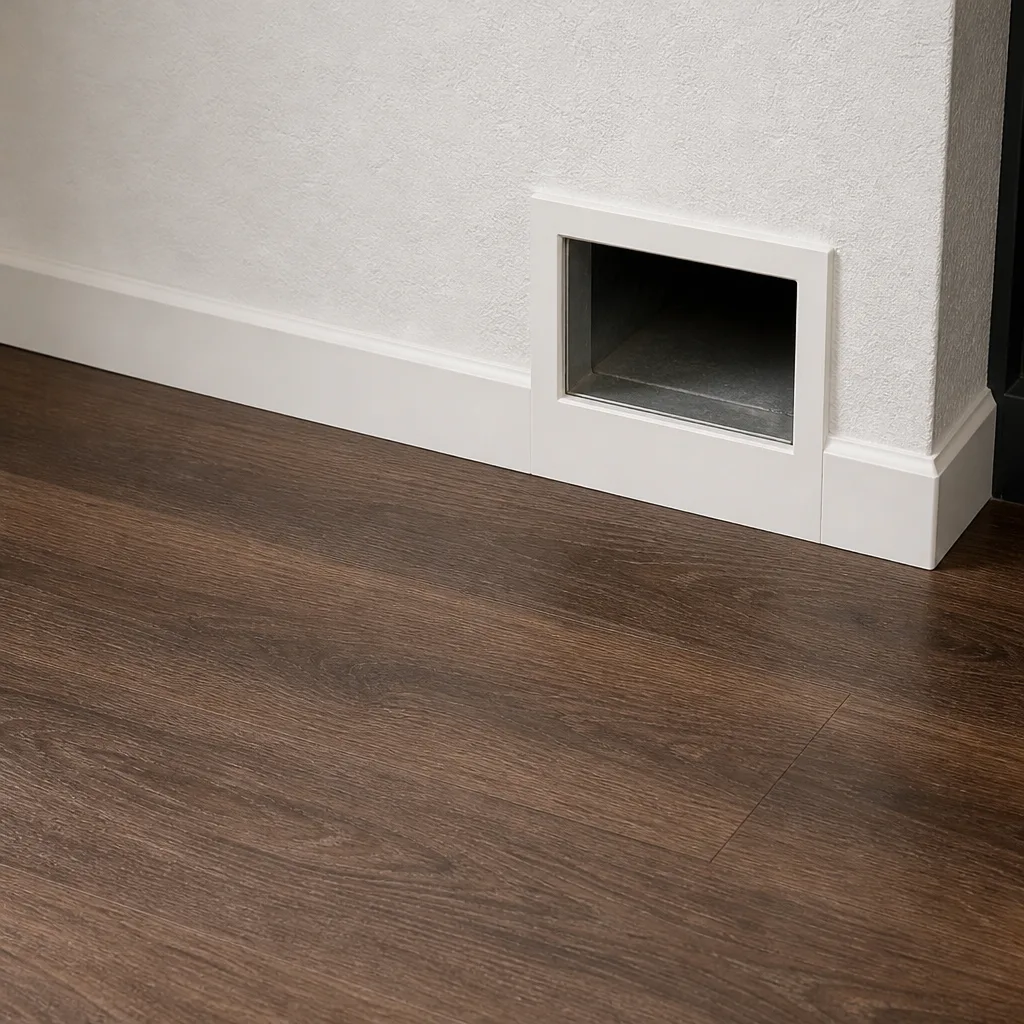 After
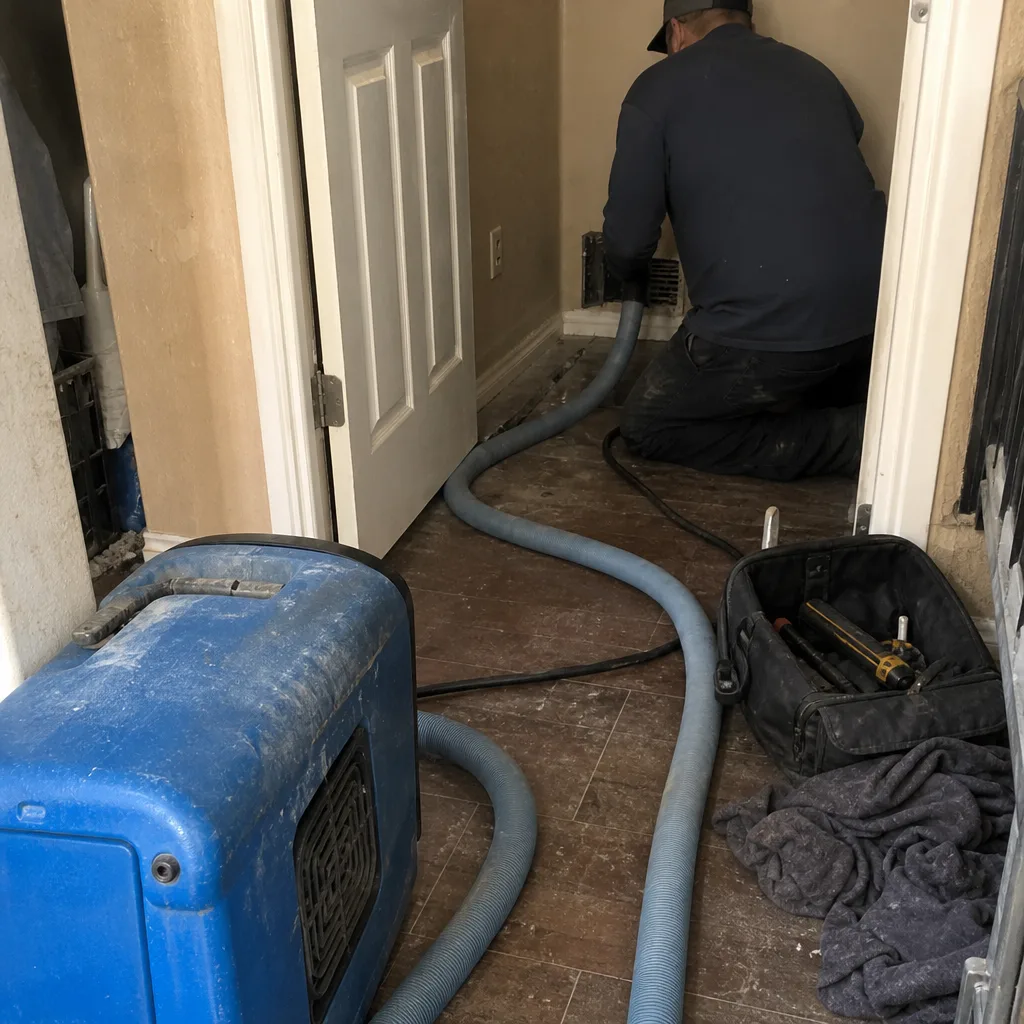 Before
 After
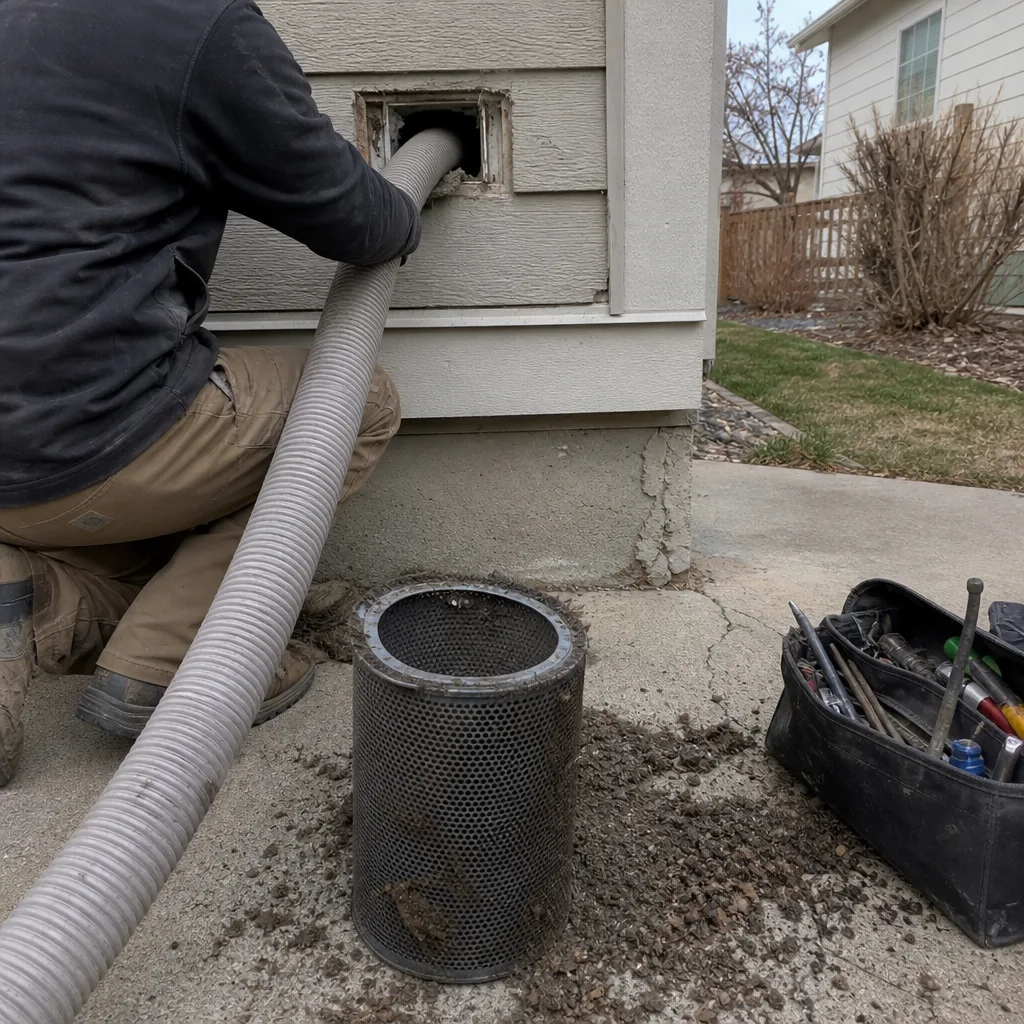 Before
 After
When to Call a Professional
Call a professional if you’re seeing any of the following: musty or burnt smells from supply vents; visible dust streaks around return grilles that come back within a few days of cleaning; worsening allergy or asthma symptoms that track with indoor time rather than outdoor pollen; a cooling or heating bill that’s climbed without a change in how the house is used; a recent renovation that generated dust; a dryer that takes more than one cycle to dry a load; or a system that’s never been professionally cleaned. Those are all signs worth a look, and none of them resolve with a filter change alone.
Castle Rock Air Duct Cleaning Pros offers free estimates in Castle Rock. Call (877) 492-1837. We answer 24/7. Fast dispatch from 7am to 7pm, Sunday through Friday. One flat price per system is agreed before work starts, and you’ll see before-and-after photos of your own system, not a generic sample.
Frequently Asked Questions
Most Castle Rock homes benefit from a full-system cleaning once a year, ideally in late spring or early fall, with a lighter inspection after smoke season. The exact interval depends on your filter rating, whether anyone smokes or burns candles, whether you have pets, and whether you’ve done any renovation. A post-smoke inspection in September is the single best addition to the annual schedule.
Yes, especially if your filtration is marginal. Summer smoke season deposits fine particulate on the coil, blower, and return ducts, and cleaning that material out restores airflow and cuts down on the smoke odor that lingers in the system. Call (877) 492-1837 for an exact quote. Estimates are free.
Before. The first heat cycle is what turns settled dust into that burnt-dust smell and pushes it through the house, so a cleaning before startup has much more effect than a cleaning after. The ideal window in Castle Rock is September or the first week of October.
A MERV-11 or MERV-13 filter is a reasonable target if your system can accommodate it, and the filter needs to be correctly seated in a sized slot to work. Honeywell and Aprilaire filtration products handle the higher ratings well. If you only have a thin 1-inch slot, a properly sized media cabinet makes a bigger difference than a high-MERV thin filter, which tends to flex out of position.
It does in Castle Rock. Dry air keeps dust particles from clumping, and static charge from airflow makes them cling to the duct walls instead of settling. The same dust load fouls the system faster here than it would in a more humid climate, which is why winter filter changes matter more than the standard 90-day interval suggests.
Pricing is set per job by a written estimate, based on the number of systems, number of vents, whether you’re having the HVAC unit cleaned and the ducts sealed in the same visit, and whether there are dryer vent or sanitizing components. Some quotes look lower because they clean visible vents and skip the coil, blower, and duct sealing, which is the work that actually keeps the system clean. Call (877) 492-1837 for an exact quote. Estimates are free.
The Bottom Line
Castle Rock’s four seasons each introduce a different contaminant profile into your duct system, and matching your cleaning and maintenance actions to that profile beats a generic annual reminder every time. Spring is the highest-intake window for pollen and furnace soot. Summer loads the system with wildfire smoke particulate that bypasses standard filters. Fall startup is where most odor and dust complaints originate. Winter’s dry air makes dust cling and foul the system faster. Build a trigger-based calendar around those four windows, keep the filter matched to the season, and treat duct repair and sealing as part of the plan rather than a repair for later. Clean the whole system, from the HVAC unit to the vent, and you’ll spend less time chasing symptoms. For a full-pathway assessment at your Castle Rock home, call Castle Rock Air Duct Cleaning Pros at (877) 492-1837 for a free estimate. One call covers cleaning, repair, and air quality, and you get air you can trust in every room.
Written by the team at Castle Rock Air Duct Cleaning Pros.