
Last updated November 25, 2026
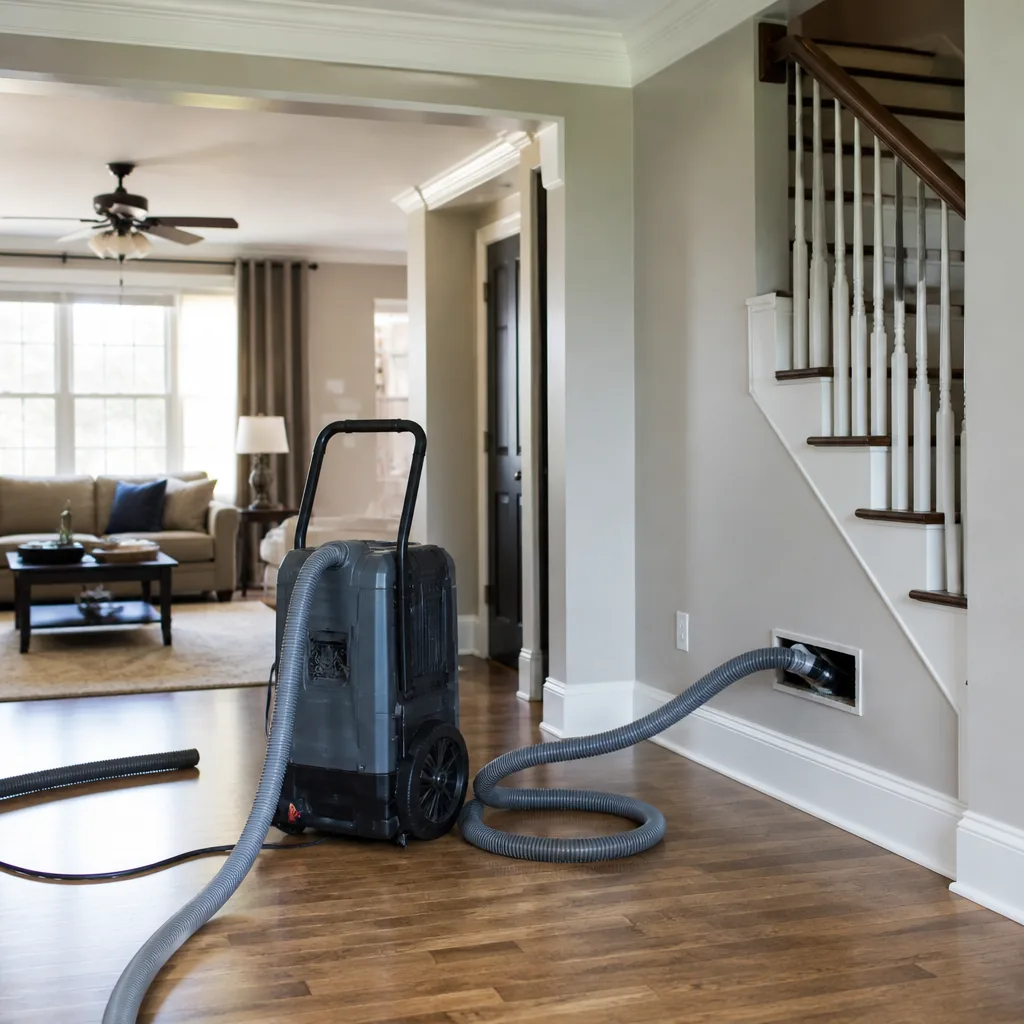 Whole-home duct cleaning
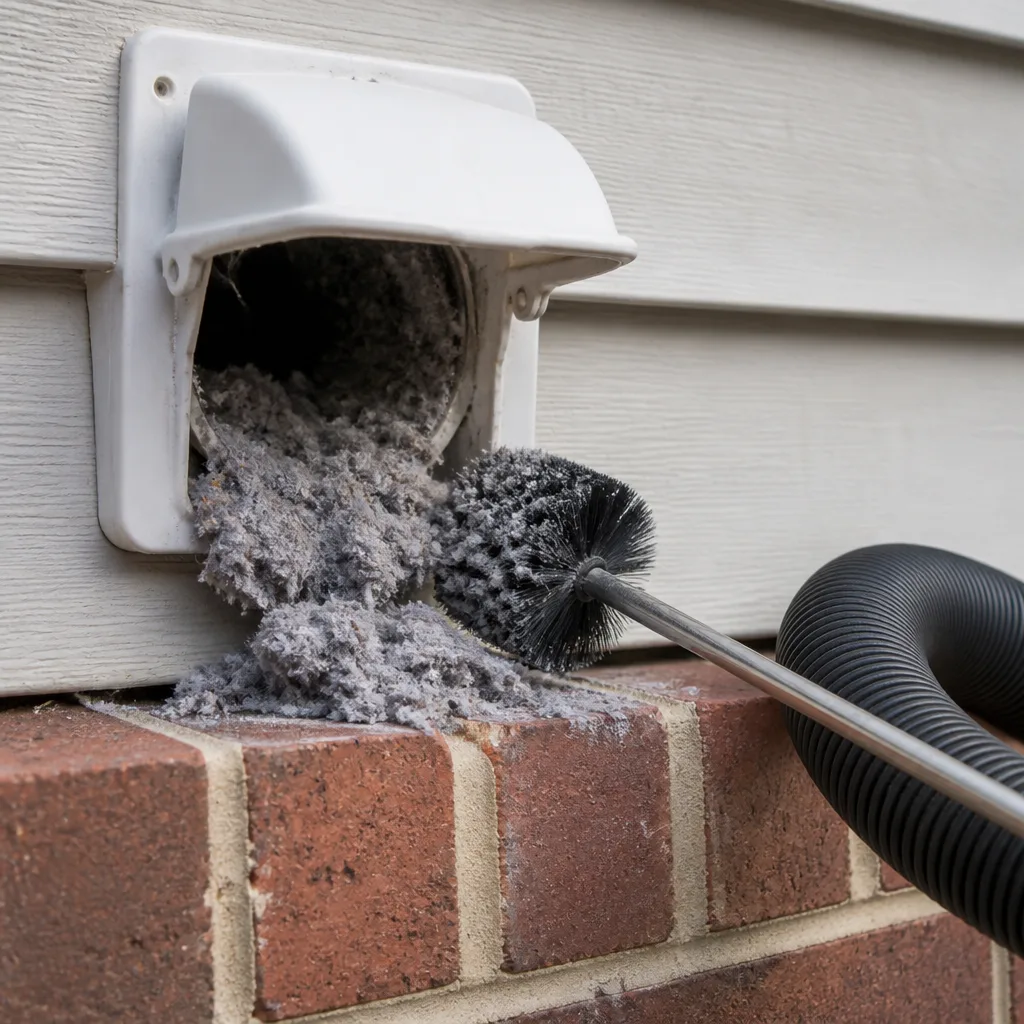 Dryer vent cleaning
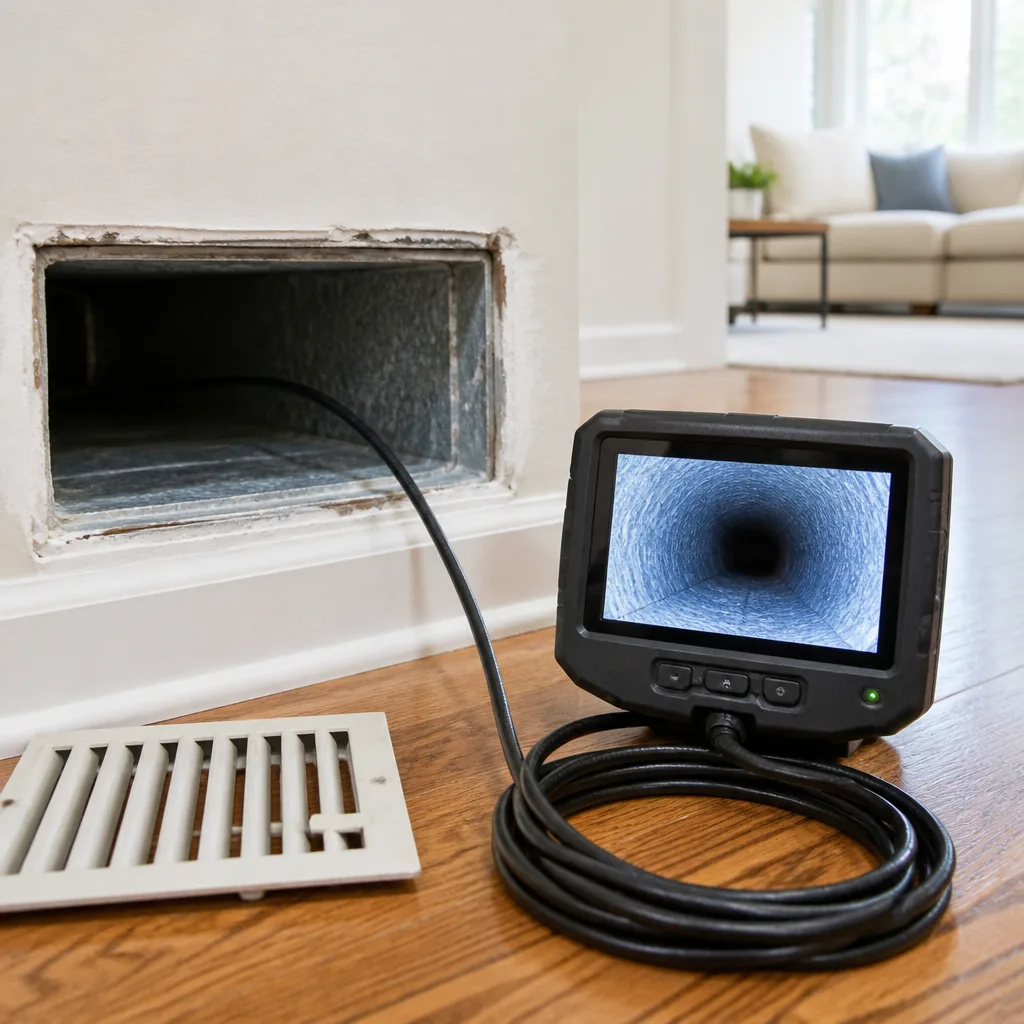 Camera inspection
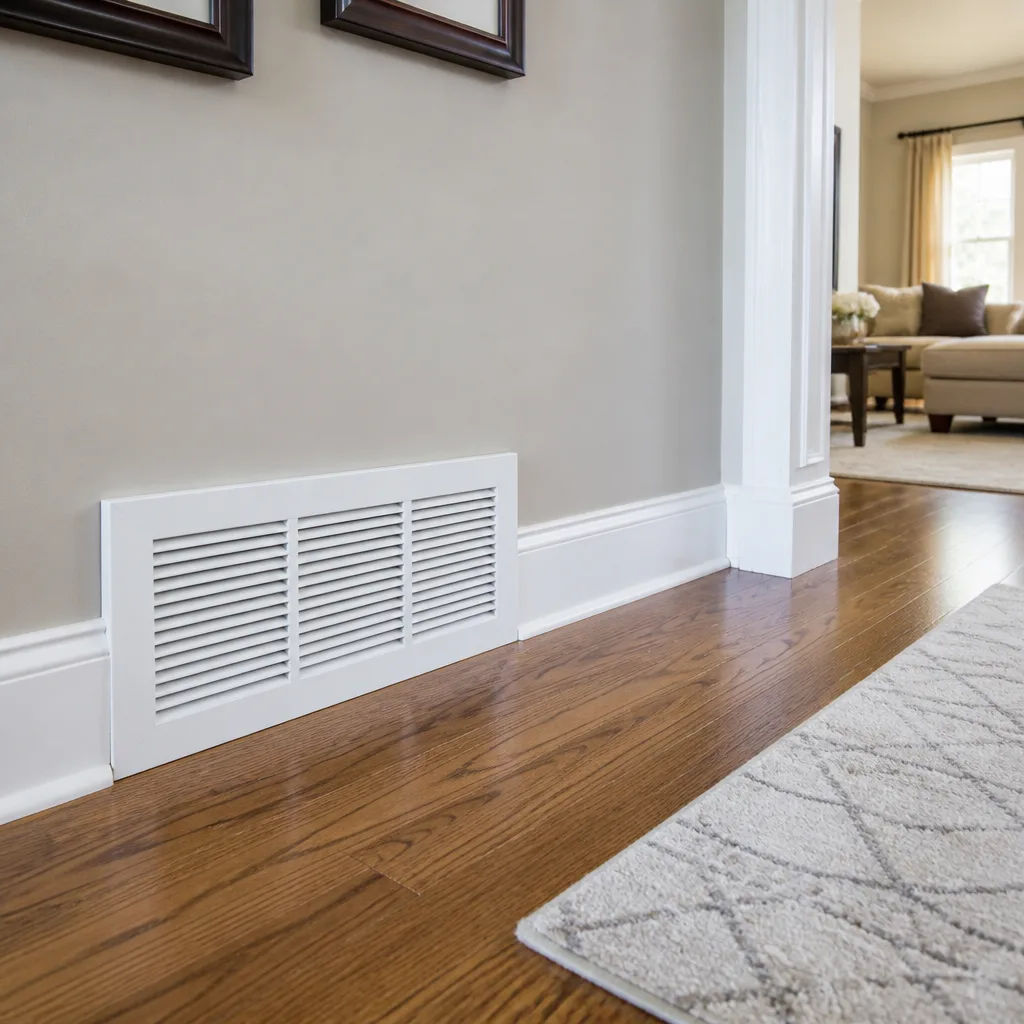 Sanitizing & deodorizing
Whole-system duct and dryer vent check with before-and-after photos - you see exactly what came out of your vents
That "$99 whole-house special" is a bait ad - the real number appears once they are in your hallway, or the "clean" is a shop-vac at the register. We photograph the inside of your ducts before and after instead.
Air Duct Cleaning Permits, Codes & Inspections in Castle Rock, CO: What You Need to Know
Most people assume air duct work is entirely permit-free. Vacuuming a duct system usually is. But here’s the part that catches Castle Rock homeowners off guard: the moment a contractor reattaches a disconnected trunk, cuts a new access panel, or seals joints with mastic across an HVAC component, that work can cross from maintenance into licensed mechanical work under Colorado rules. Done without the right paperwork, it can create an insurance gap and a headache at resale. In this guide, we explain where that line sits, how Douglas County permitting works, how Colorado DORA licensing verification works, what the rules say about sanitizers, and exactly what documents to keep after any duct work touches mechanical parts.
Quick Answer
Air duct cleaning itself is treated as routine maintenance in Colorado and doesn’t require a permit. But duct repair, sealant application on HVAC components, and new access cutouts are generally classified as mechanical work, which means a locally licensed contractor and – in many cases – a Douglas County permit. Sanitizer and antimicrobial applications can also fall under Colorado pesticide rules. Always verify licensing through the DORA database and keep written documentation for insurance and resale.
Styles & brands we work with
- Whole-home duct cleaning
- Dryer vent cleaning
- Camera inspection
- Sanitizing & deodorizing
Table of Contents
- Is Duct Cleaning Maintenance or Mechanical Work?
- When Douglas County Requires a Permit for HVAC-Adjacent Work
- How to Verify a Contractor’s License in Colorado
- Sanitizer and Antimicrobial Rules Under Colorado Law
- How Unpermitted Work Surfaces at a Castle Rock Resale
- What Documents to Keep After Any Duct Work
- What an Inspection Actually Checks
- Castle Rock Climate and Housing: Why This Matters Here
Is Duct Cleaning Maintenance or Mechanical Work?
The distinction matters more than most homeowners realize. Colorado treats routine maintenance – cleaning, filter changes, minor adjustments that restore original function – differently from mechanical work that alters a system. That single line separates a permit-free cleaning from a job that should have pulled paperwork.
Painting with a broad brush, here’s where the line tends to sit:
- Firmly maintenance: Source removal of dust, debris, and buildup using negative-pressure equipment, without altering the system’s physical configuration. These jobs typically don’t require a permit.
- Usually mechanical work: Reconnecting a completely detached duct trunk to an air handler, cutting a new access opening in a plenum or trunk line, resealing supply joints with mastic or tape across components designed as part of the HVAC system, or replacing damaged flex runs with new ductwork.
- Gray zone: Re-securing a sagging flex run to its existing collar, applying sealant to an existing joint that was already sealed, or making minor repairs that return the system to its designed state. Context matters, and local permitting offices interpret these on a case-by-case basis.
Why does this matter in Castle Rock? Because duct systems here run through conditioned and unconditioned spaces in some very cold winters. Disconnected trunks and crushed flex runs aren’t rare. When a technician reattaches that trunk, they’ve done something. When they cut a new access port to reach the plenum, they’ve altered the system. That’s mechanical work, and Colorado’s licensing framework cares about who does it and whether the local authority signed off.
Our approach at Castle Rock Air Duct Cleaning Pros is to clean the whole air pathway – but we also flag anything that touches mechanical components and explain whether the repair needs to route through a licensed contractor and permit. If you want the broader picture on the cleaning side, the air duct cleaning service page lays out what a standard job covers.
When Douglas County Requires a Permit for HVAC-Adjacent Work
Douglas County and the Town of Castle Rock share permitting responsibility for residential HVAC work, and the trigger isn’t duct cleaning – it’s what happens around it. The clearest permit triggers are:
- New or modified duct runs. Adding a supply or return serving a new room, or rerouting a trunk line, generally requires a mechanical permit and inspection.
- New access openings through structural or fire-rated assemblies. If a new access panel is cut into a wall, floor, or ceiling that has a structural or fire-rated component, that’s often a separate permit issue.
- Replacement of major HVAC components. Swapping an air handler, furnace, or coil generally requires a mechanical permit regardless of whether duct work is involved.
- Sealing work that alters combustion air pathways. In tight Colorado homes, aggressive duct sealing can affect combustion air for gas appliances. Mechanical permits are sometimes required when the work touches that balance.
What usually doesn’t require a permit: cleaning, sanitizing (within the rules below), sealing an existing joint with tape or mastic at the same location, and resecuring a sagging run to its existing collar. Routine HVAC cleaning of the equipment and coil is also typically permit-free because it restores function rather than altering the system.
How to check whether your specific job needs a permit: call the Town of Castle Rock building department or Douglas County’s building division and describe the exact scope in plain language. “Reconnect a disconnected 8-inch flex run to a collar on the main trunk” gets a different answer than “cut a new access opening in the plenum.” When in doubt, ask before the work starts. A one-minute phone call beats a revealed unpermitted change at resale.
How to Verify a Contractor’s License in Colorado
Colorado regulates many trades at the state level through the Department of Regulatory Agencies (DORA), and mechanical contractors specifically through the State Electrical Board and the Plumbers Board for adjacent work; HVAC mechanical work itself sits under local authority in most jurisdictions, including Douglas County and Castle Rock. That makes local verification as important as the state check.
Here’s the step-by-step every homeowner should run before signing an estimate that includes duct repair or sealing:
- Ask the contractor for their state-issued license or registration number, or their local mechanical contractor license number if the job is in the Town of Castle Rock.
- Search the Colorado DORA online license lookup at dora.colorado.gov to confirm the number, the name it’s issued to, and that it’s active.
- Call the Town of Castle Rock building department or Douglas County to confirm local licensing, and ask whether the specific scope you’re considering requires a permit.
- Request a certificate of insurance showing both general liability and workers’ compensation coverage. Confirm the certificate names the correct business entity.
- Ask which person will actually be on site and whether they’re an employee or a subcontractor. Subcontractors should carry their own coverage.
One more point worth stating plainly: many air duct cleaning companies are not licensed mechanical contractors, and that’s fine for pure cleaning. But if the technician suggests “while we’re here, we’ll reseal that trunk and add an access port,” that scope should come through a licensed mechanical contractor, and the paperwork should reflect it. Our technicians have up to 10 years of experience and use commercial-grade Rotobrush and Nikro equipment, which is why we can spot the repair line clearly – and we’re direct with homeowners about when a repair needs to route through a licensed mechanical contractor rather than being absorbed into a cleaning invoice.
Sanitizer and Antimicrobial Rules Under Colorado Law
Sanitizing ductwork goes one step past cleaning, and it’s the step most homeowners don’t ask about. Any product that claims to kill, reduce, or control microorganisms in a duct system can be regulated as a pesticide under the Federal Insecticide, Fungicide, and Rodenticide Act and, in Colorado, under the Colorado Department of Agriculture’s pesticide program.
What that means in practice:
- The product must be EPA-registered for HVAC use. A generic “anti-microbial fogger” without a label for HVAC interior surfaces isn’t legal to apply inside a duct system.
- Application must follow the label exactly. Dilution, dwell time, and required PPE are on the label to be followed, not adjusted on-site.
- Some applications require a licensed pesticide applicator. Read the product label. If it carries a “Restricted Use” designation, only a licensed applicator can apply it.
- California is not the only state with rules. Colorado enforces its own pesticide program, and complaints about a company applying a non-registered product to HVAC systems belong with the Colorado Department of Agriculture, not just the local building department.
For homeowners with asthma, allergies, or immune-compromised family members, this is not a technicality. A product misapplied at the wrong dilution, or a fogging product that isn’t labeled for HVAC interiors, can make indoor air worse rather than better. Ask what product is being used, ask to see the label, and confirm whether the technician applying it is licensed for that product in Colorado. We work with products from Aprilaire and Abatement Technologies, both of which carry clear HVAC labeling, and we’ll always show the label on request.
Sanitizing is also not a substitute for source removal. Air Quality & Sanitizing services work best after the ducts are cleaned, not instead of cleaning. Order matters.
How Unpermitted Work Surfaces at a Castle Rock Resale
A Castle Rock home sale is where unpermitted duct work tends to come back into focus. Standard purchase-and-sale inspections don’t inspect ducts inside walls, but they do inspect mechanical systems – and inspectors notice things. A newly cut access panel with no permit sticker, a mastic sealant pattern that doesn’t match the original install, a repair tag from a company without a mechanical license, all get noted.
Here’s how it usually plays out:
- The buyer’s inspector notes “recent apparent modifications to duct system; recommend documentation.” No alarm bells, just a note.
- The buyer’s agent requests copies of permits and final inspection sign-offs.
- If no permits exist and the work is mechanical in nature, the buyer’s lender may flag it. FHA and VA loans are stricter about unpermitted alterations than conventional loans.
- The seller has to either produce the documentation, pull a retroactive permit and have the work inspected, or negotiate a credit at closing. Retroactive permits require the modifications to have been done to code and inspected – which means the work has to be opened up if it’s not visible.
- Best case, the seller documents everything and the deal moves forward. Worst case, the credit comes out of the seller’s proceeds.
The insurance side is just as relevant. Some homeowner policies exclude damage caused by unpermitted work if the insurer can show the work itself caused the loss. Fire from a disconnected dryer vent, for instance, or water damage from condensation on an improperly sealed trunk in a cold Castle Rock winter. If the modification that led to the damage wasn’t permitted or done by a licensed contractor, coverage can be contested. That’s the piece most homeowners never think about.
One separate fire-risk service worth calling out: dryer vent cleaning. Dryer vent work is a distinct category from duct work, and some vent cleaning or vent replacement does need a permit if it changes the vent’s path or length. Insurers care about documentation here too, because dryer vent fires are one of the most preventable residential fire categories.
What Documents to Keep After Any Duct Work
Ask any contractor who does duct work that touches mechanical components for a documentation packet. Whether you’re planning to sell in two years or twenty, having it on file is the difference between a smooth resale and a delay.
The packet should contain:
- The contractor’s license number (mechanical or local, whichever applies to the scope), with the name of the entity the license is issued to.
- A copy of the permit and, after inspection, the final inspection sign-off. Photograph the permit card attached to the unit for backup.
- Before-and-after photos of the duct interior, taken through the access points, showing the source removal and any sealant applied.
- The written estimate and final invoice, itemizing the work performed. “Duct cleaning and sealing” is not sufficient documentation; specify reconnected trunk, sealed joints, and access panel location.
- Product labels and safety data sheets (SDS) for any sanitizer or sealant used, even if you didn’t request the sanitizing service yourself.
- A certificate of insurance dated within the policy period covering the work date.
File this packet with your home’s maintenance binder, and make sure the next owner receives it at closing. Title companies and buyer’s agents increasingly ask for it, especially in Castle Rock neighborhoods where housing turnover runs high and buyers are thorough.
If you ever have a question about what a company did or didn’t document, calling the contractor should be easy. If it isn’t, that’s a sign the paperwork never existed.
What an Inspection Actually Checks
When Douglas County or the Town of Castle Rock inspects mechanical work around duct systems, the inspector isn’t re-cleaning the ducts. They’re confirming that the installed work matches the permitted scope, that connections are secure, and that the assembly is sound.
A typical inspection focuses on:
- Connection integrity. Flex or rigid duct connections to collars, plenums, and air handlers should be mechanically fastened and sealed, not just taped.
- Support. Ducts should be strapped or hung with proper spacing, not sagging across joist bays.
- Access. Access panels should be installed with proper clearance and, where relevant, fire-rated assemblies should be maintained.
- Combustion air. In gas-heated homes, the inspector verifies that duct sealing hasn’t restricted combustion air to appliances.
- Alignment with documentation. The work on site should match the description on the permit application.
Cleaning inspections – where they occur at all – are different. Some property managers and commercial building owners request a post-cleaning walkthrough with before-and-after photos as part of their own documentation standards. That’s the kind of inspection we expect to support on our Castle Rock Air Duct Cleaning Pros jobs, and we’re happy to walk through it with any homeowner, property manager, or buyer’s inspector who asks.
One practical note: don’t confuse a mechanical inspection (permit-driven) with a home inspection (buyer-driven) or an indoor-air-quality assessment (health-driven). Each has a different scope, and each requires different evidence.
Castle Rock Climate and Housing: Why This Matters Here
Castle Rock sits at elevation along the Front Range, and that shapes how duct work behaves in local homes. Winter nights run cold, and the temperature swings between a sunny afternoon and a clear night can be substantial. Duct systems that run through unconditioned attics and crawlspaces see wide thermal cycling, which is hard on flex runs, sealant, and taped joints. A mastic joint that holds in a mild climate can crack after a few seasons here if it wasn’t applied to a flexible, surface-prepped joint.
That’s exactly why sealing work should be treated as mechanical work when it goes beyond re-touching an existing joint. A temporary seal that fails in the cold isn’t a repair, and if it wasn’t permitted or examined, it’s also not documented.
Housing stock matters too. Castle Rock grew fast through the 2000s and 2010s, and homes built during that period often have duct systems that were installed with a focus on speed. Disconnected flex runs behind drywall are not rare, and neither are slightly crushed trunks behind finished ceilings. When we find one, the answer isn’t always “seal it and move on.” Sometimes the answer is “this needs a licensed mechanical contractor and a permit to do correctly.”
For neighborhoods across The Meadows, Crystal Valley, Founders Village, and Red Hawk, the pattern we see is consistent: the cleaning scope is straightforward, and the repair scope needs clarity on the front end. Documenting it well is the best protection for a Castle Rock homeowner, whether they sell in 2026 or well beyond.
Common Mistakes to Avoid
- Assuming “it’s just cleaning” covers the repair. If the technician is reconnecting, cutting, or sealing anything beyond an existing joint, ask whether that scope is mechanical work in Castle Rock and whether it required a permit.
- Not checking DORA or the local building department before signing. Five minutes on the DORA lookup site and one call to the Town of Castle Rock will tell you more than any sales pitch.
- Accepting a sanitizer application without confirming the label. Colorado pesticide rules apply, and the product label has to be EPA-registered for HVAC interior use. If the technician can’t show you the label, don’t let them apply it.
- Skipping the documentation packet. A week later, you won’t remember which joint was resealed or what product was applied. Get it in writing and photograph the permit card.
- Ignoring dryer vent permits. If a vent is being rerouted or shortened, that’s often a permit-related change in Douglas County. Insurers care, because dryer vent fires are preventable and unpermitted modifications can complicate claims.
- Believing the “no permit needed” line because the price is low. A cheap price can hide a scope that skipped the permit. That’s the scope that surfaces at resale or in an insurance dispute.
- Not telling your insurer about mechanical work. If duct or dryer vent modifications are significant, one call to your insurer confirming coverage is worth the time.
See the difference
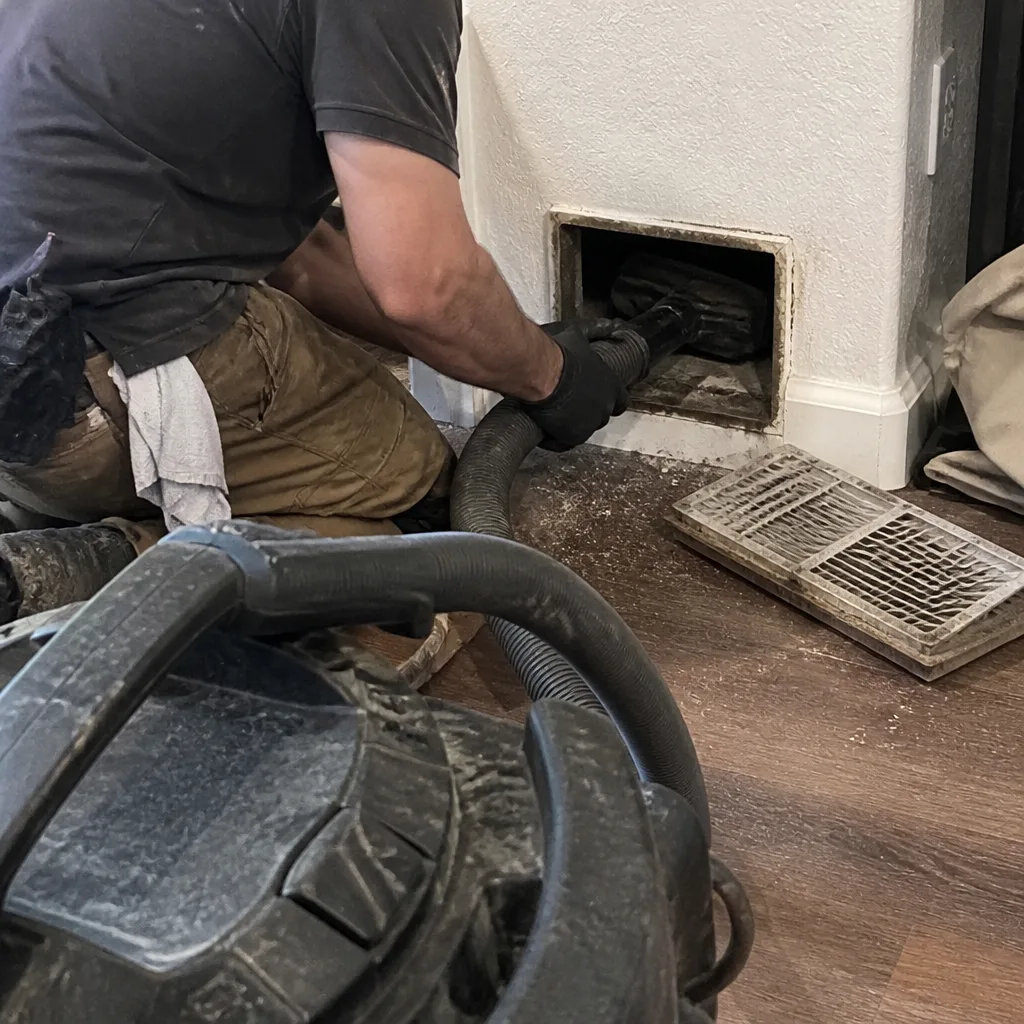 Before
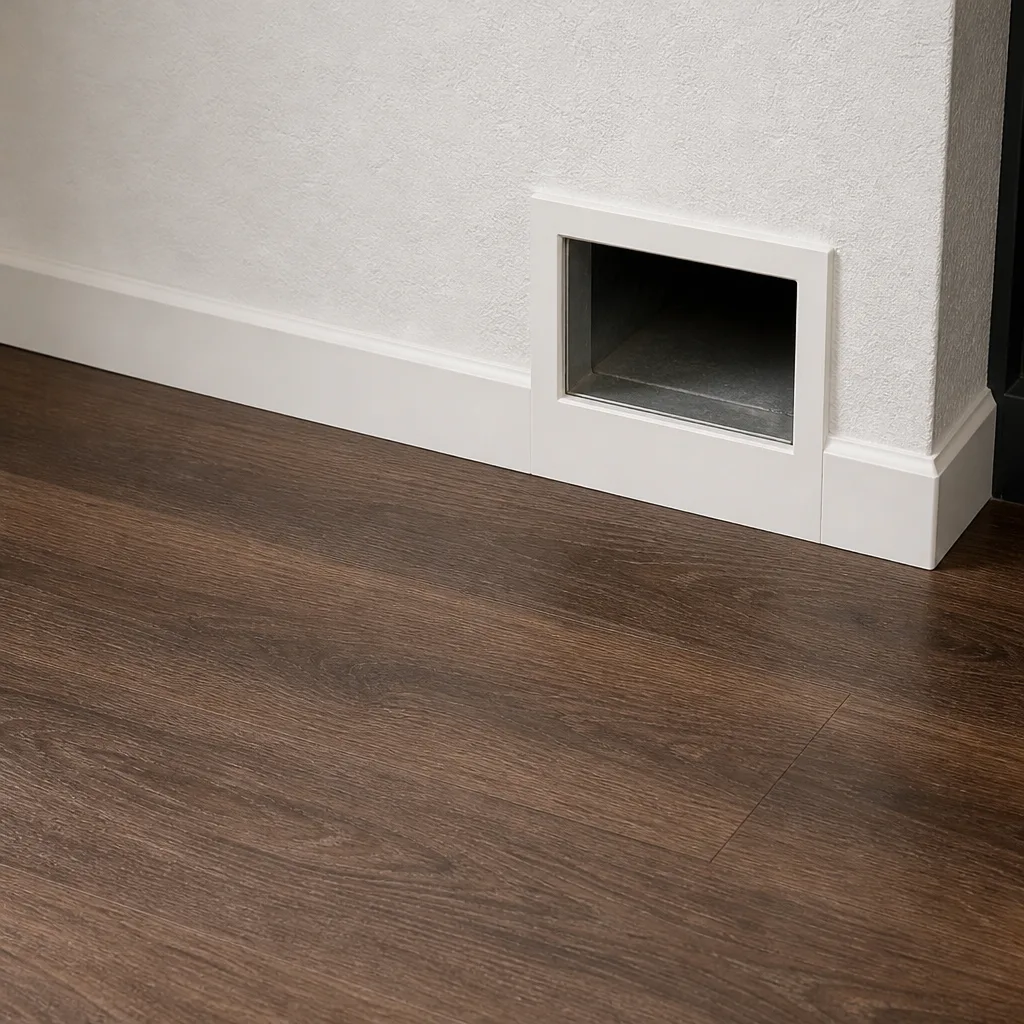 After
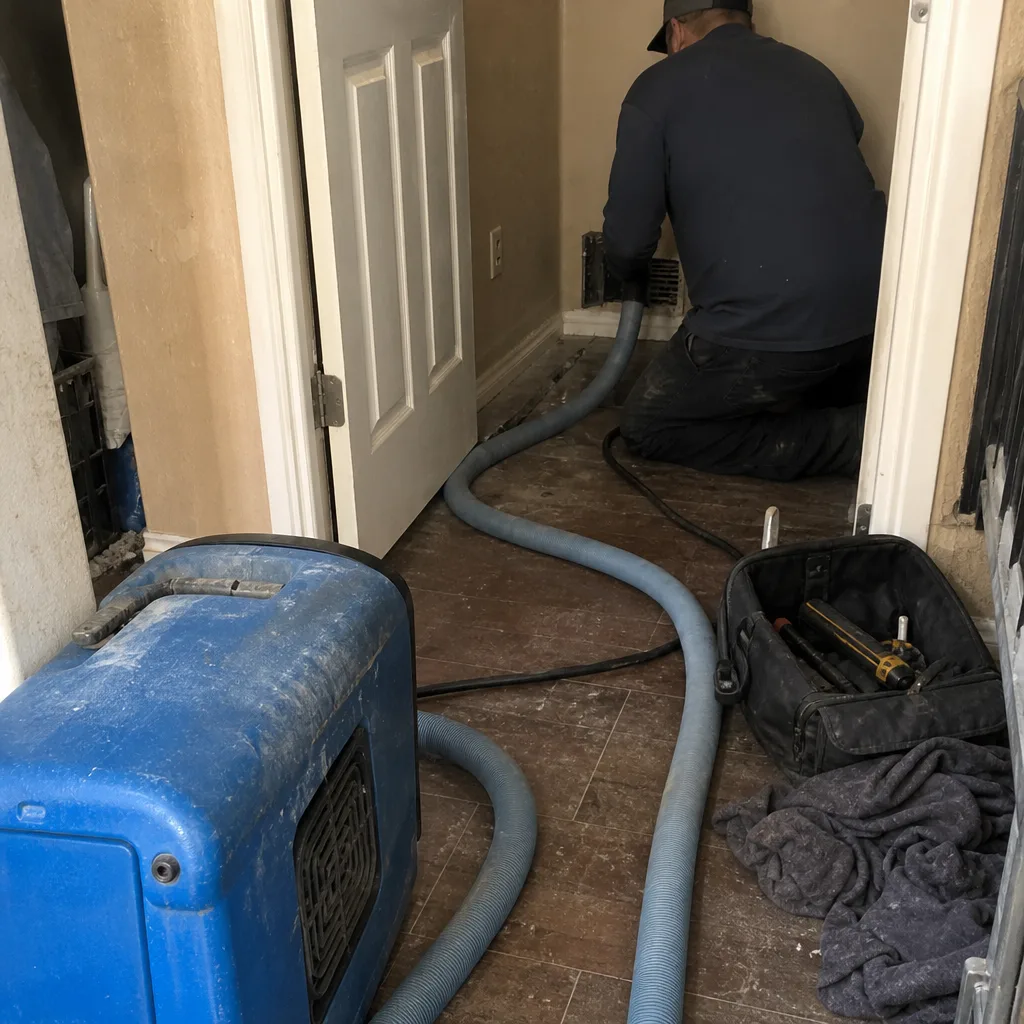 Before
 After
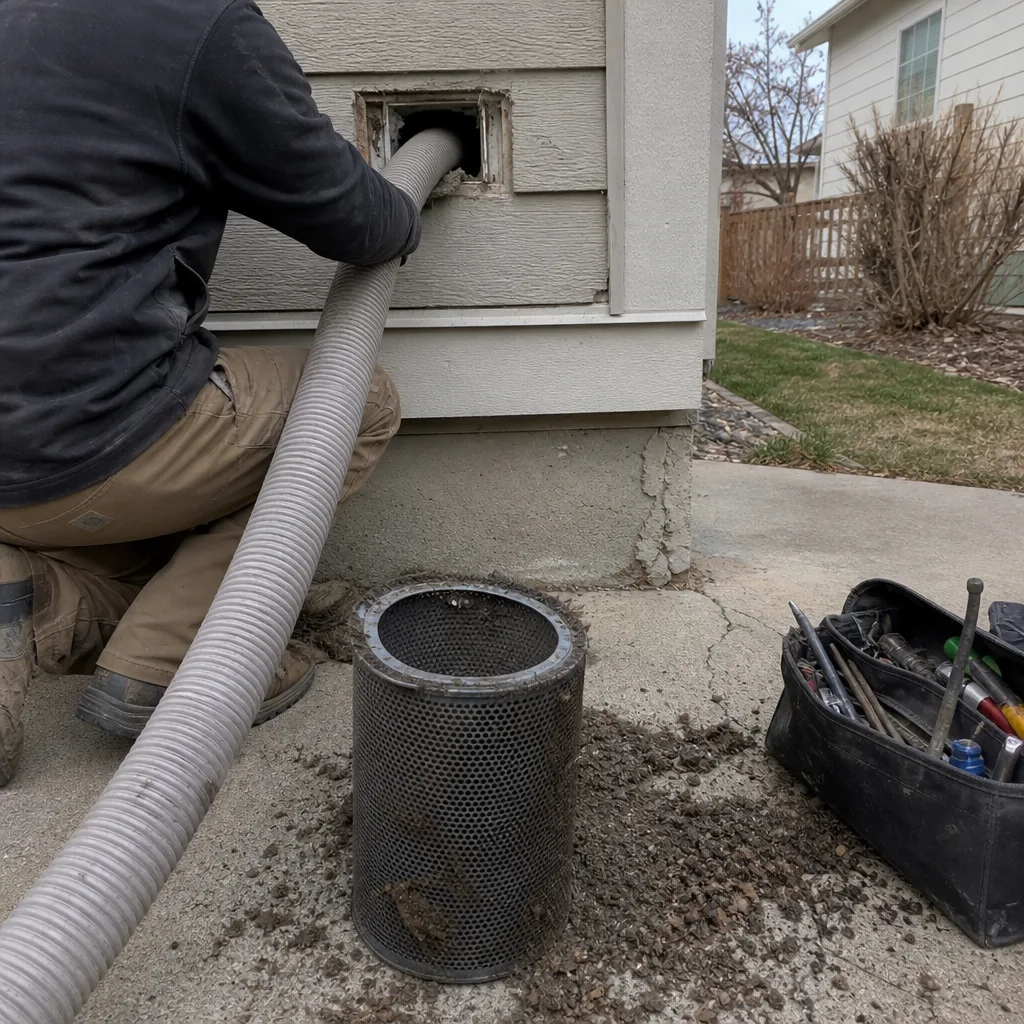 Before
 After
When to Call a Professional
Call a professional if the air coming from your registers smells musty, if some rooms get almost no airflow while others are fine, if you see disconnected flex runs behind a return grille, if a dryer is taking two cycles to dry a load, or if you’re getting a Castle Rock home ready to list and can’t document prior duct work. Any of these signs warrant a real assessment, not a quick surface wipe. Castle Rock Air Duct Cleaning Pros offers free estimates in Castle Rock and works with commercial-grade Rotobrush and Nikro equipment across the full air pathway, including duct repair and sealing. If the scope turns out to be mechanical work, we’ll tell you so and point you to the right licensed path. Call (877) 492-1837. We answer 24/7. Fast dispatch from 7am to 7pm, Sunday through Friday.
Frequently Asked Questions
Air duct cleaning alone does not require a permit in Castle Rock because it’s classified as routine maintenance. If the work includes duct repair, new access openings, or modification to mechanical components, a permit through the Town of Castle Rock or Douglas County is often required, and the work should be done by a licensed mechanical contractor. Call (877) 492-1837 if you’re not sure which category your job falls into – estimates are free.
Verify at the state level through the Colorado DORA license lookup at dora.colorado.gov, and at the local level by calling the Town of Castle Rock building department or Douglas County. Ask for the license number, the name the license is issued to, and a current certificate of insurance covering both general liability and workers’ compensation. If any of these can’t be produced on request, walk away. Call (877) 492-1837 for a documented free estimate.
They can. Some homeowner policies exclude or contest coverage for damage caused by work that wasn’t permitted or performed by a licensed contractor, particularly for fire damage related to dryer vents or mechanical modifications. If you’ve had duct repairs done without documentation, ask your insurer directly whether your current coverage accounts for the work. For a documented assessment before any repair, call (877) 492-1837 – estimates are free.
Yes – any product that claims to kill, reduce, or control microorganisms in HVAC systems can fall under Colorado Department of Agriculture pesticide rules and EPA registration requirements. Ask which product is being used, ask to see the label, and confirm it’s registered for HVAC interior application. If it carries a Restricted Use designation, only a licensed pesticide applicator can apply it. Call (877) 492-1837 to talk through options.
Often, yes – inspectors flag apparent recent modifications to duct systems and recommend documentation, even if they can’t inspect inside walls. Lenders including FHA and VA are stricter about unpermitted mechanical alterations than conventional lenders, and missing documentation typically gets resolved through a closing credit or a retroactive permit. If you’re preparing to sell and can’t find your permits, call (877) 492-1837 for a documented assessment – estimates are free.
Ask for the contractor’s license number and issuing authority, a copy of the permit if the scope includes repair or modification, the product labels for any sanitizer used, and before-and-after photos when the work is done. Also ask which specific work falls under maintenance versus mechanical scope. A contractor who answers all of this clearly is the one to hire. Call (877) 492-1837 for a free estimate with that documentation standard.
The Bottom Line
Cleaning your ducts is maintenance. Repairing, modifying, or resealing them in a way that changes the system is mechanical work, and Colorado and Douglas County treat those two things differently. Verify licensing through DORA and the Town of Castle Rock, confirm the sanitizer label before anyone sprays anything in your HVAC system, request permits for any scope that modifies mechanical components, and keep the documentation packet – it protects your insurance and your resale. When the scope is unclear, ask. Our team at Castle Rock Air Duct Cleaning Pros is direct about which side of the line your job sits on.
To get a documented, no-pressure assessment of your ducts, dryer vent, or HVAC system in Castle Rock, call (877) 492-1837. We answer 24/7. Fast dispatch from 7am to 7pm, Sunday through Friday. Estimates are free and the price is set per job by the written estimate.
Written by the team at Castle Rock Air Duct Cleaning Pros.